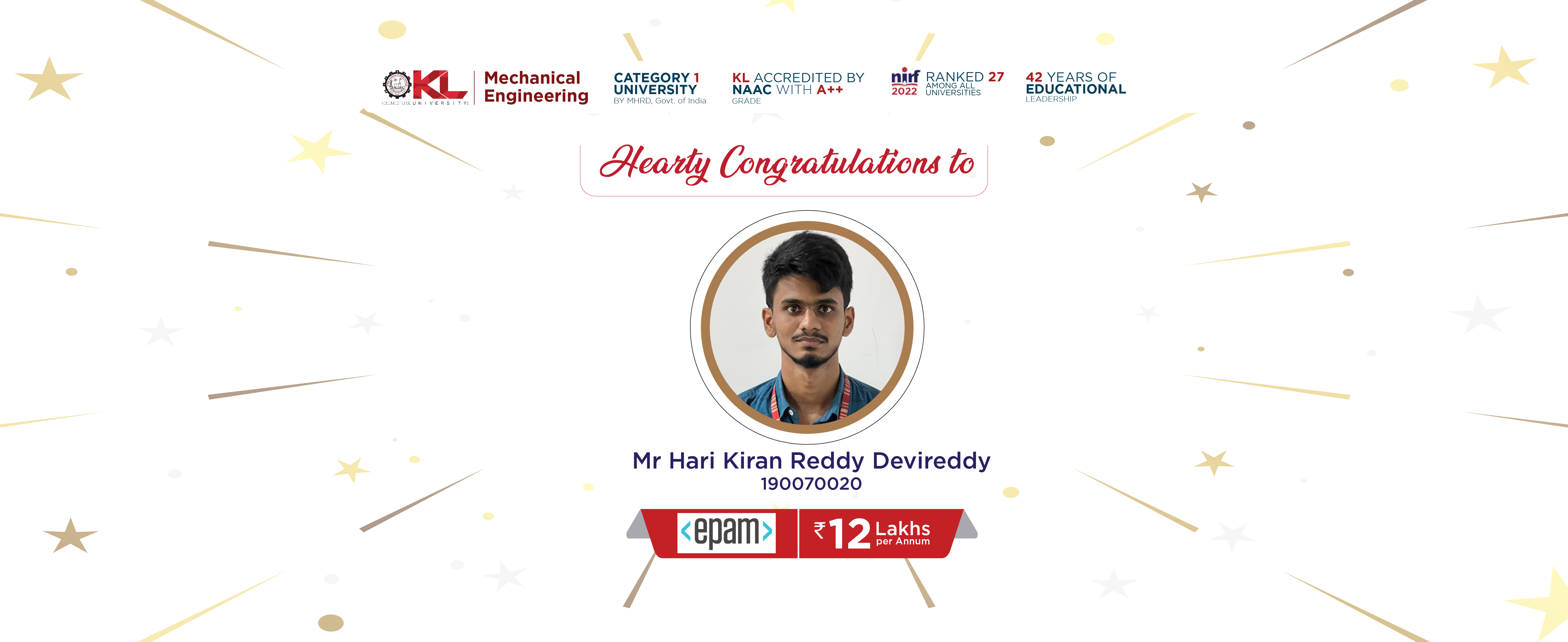
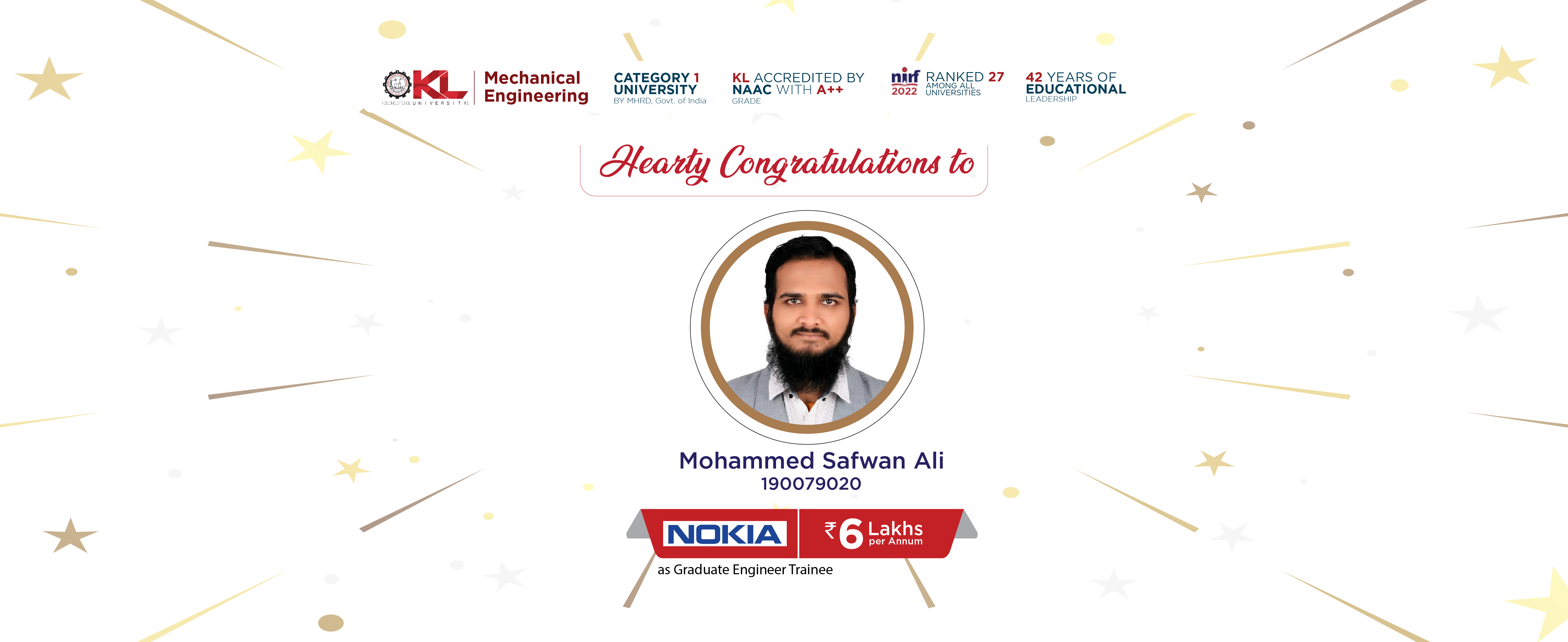
The Mechanical Engineering Department’s main focus if to nurture our students in such a manner that they are equipped with all the skills, that help them to fulfil their career aims and ambitions, and get well settled it their career in either, Core or Software companies, or through becoming Entrepreneurs, or pursue higher education in world's best Ranked & Rated Universities abroad.
The main Highlights of B.Tech. Mechanical Engineering at KL Deemed to be University are:
1. Our Syllabus and Curriculum, is fully designed and developed by experts from Industries like: Cyient Technologies, NISA, John Deer, Bombardier and experts from Practicing Engineers of Professional Bodies like ASME, Institution of Engineers-India, which makes our curriculum, syllabus and the examination patterns being followed, totally industry focused, which enables our students get an edge over any other students at other colleges/ universities.
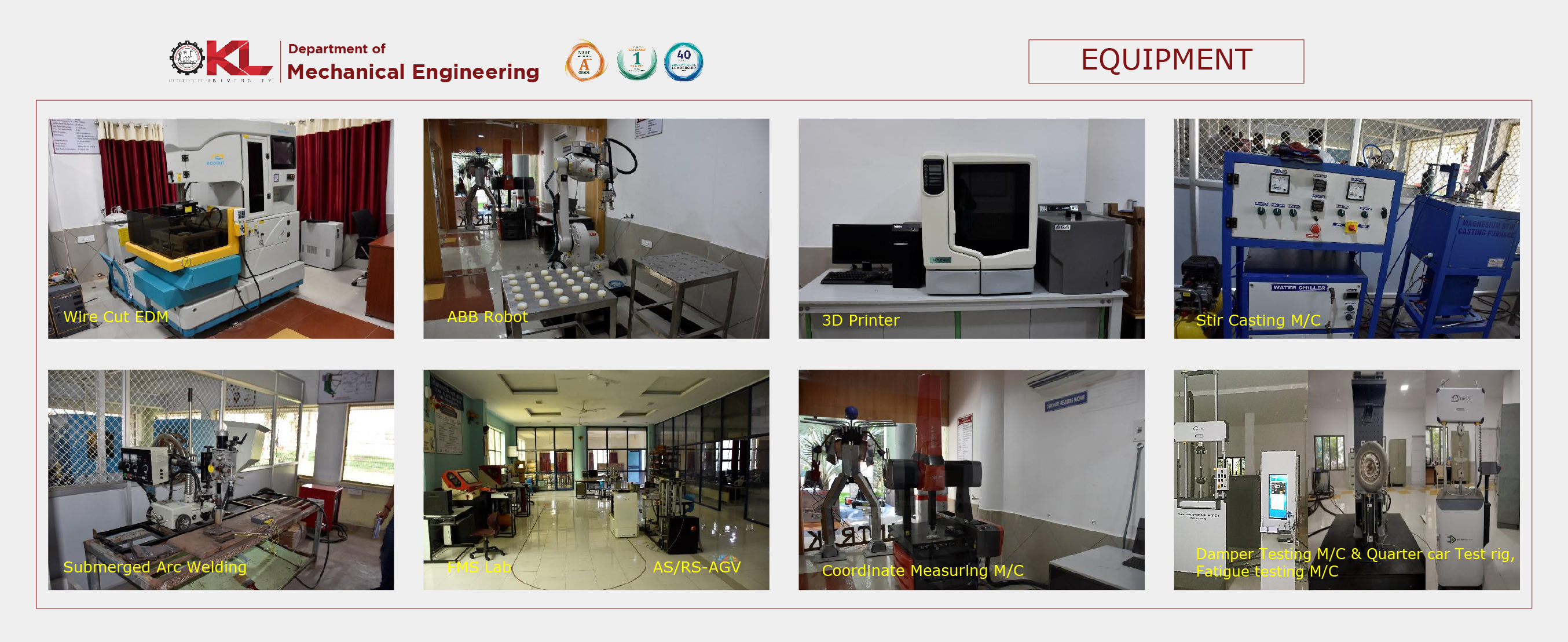
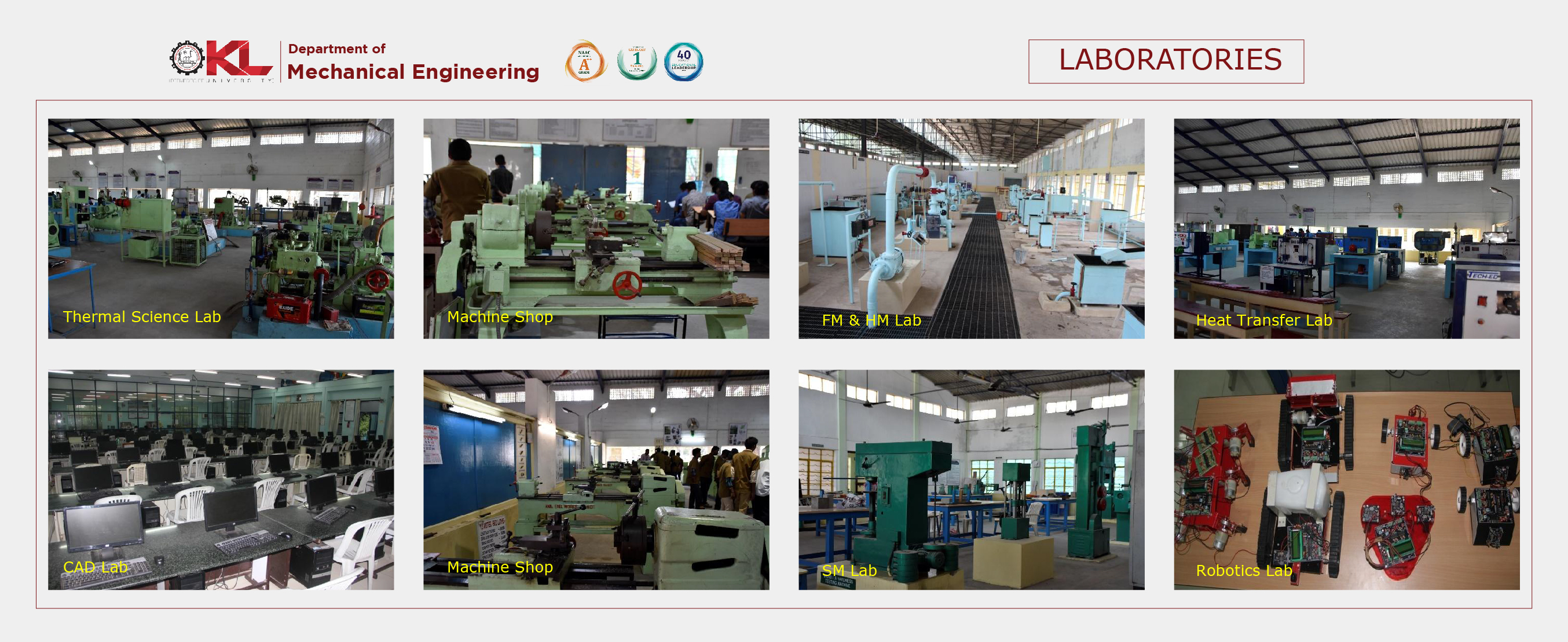
2. We have 12 state of the art laboratories, with latest equipment, software and hardware, specifically designed as per current and future industry needs, to impart the much needed practical knowledge and hands on to our students, that enables them fare better in placement interviews over any other college/ university student owing to the gained practical knowledge through our labs.
3. Our syllabus is perfectly designed in such a way that apart from courses of mechanical engineering domain, our students also compulsorily stuudy and practice courses / labs from CSE, ECE domains like C, C++, JAVA, Python - that enables our students be ready for all software jobs in companies like Google, Microsoft, TCS, CTS, Virtusa, Cummins, Infosys etc. Our students also study courses of Signal Analysis, Signal Processing, Robotics and Mechatronics, Machine Learning, Artificial Intelligence, which enables our students get ready for the emerging changes of industries and sustain in the job market despite of rapid slump owing to automation, because these courses equip our students knowledge and expertise to futuristic job opening areas like Data Analytics, Machine Learning and Artificial Intelligence.
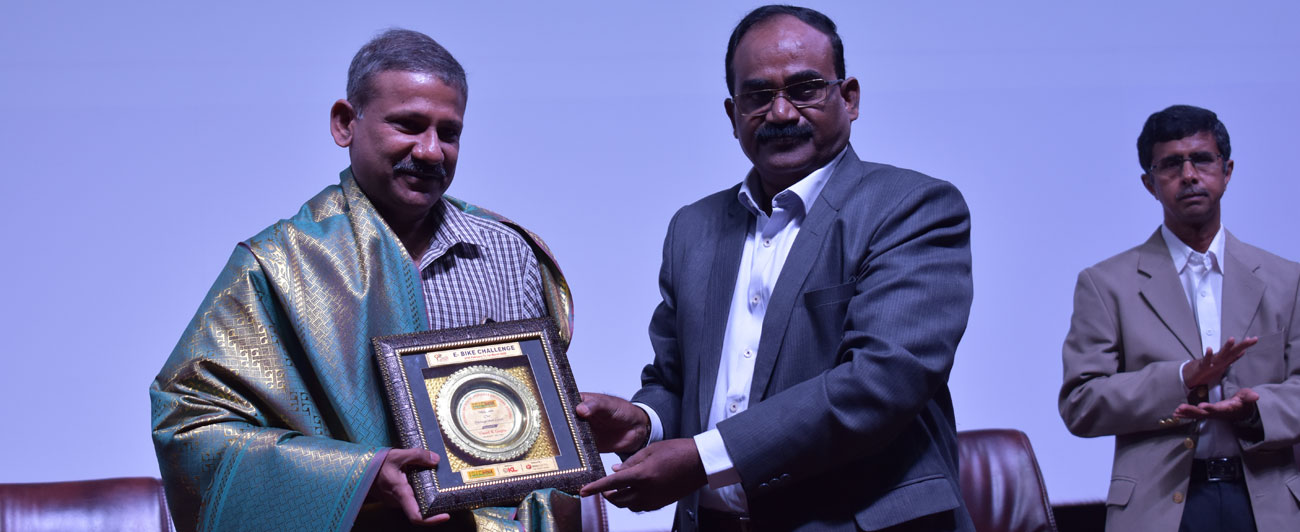
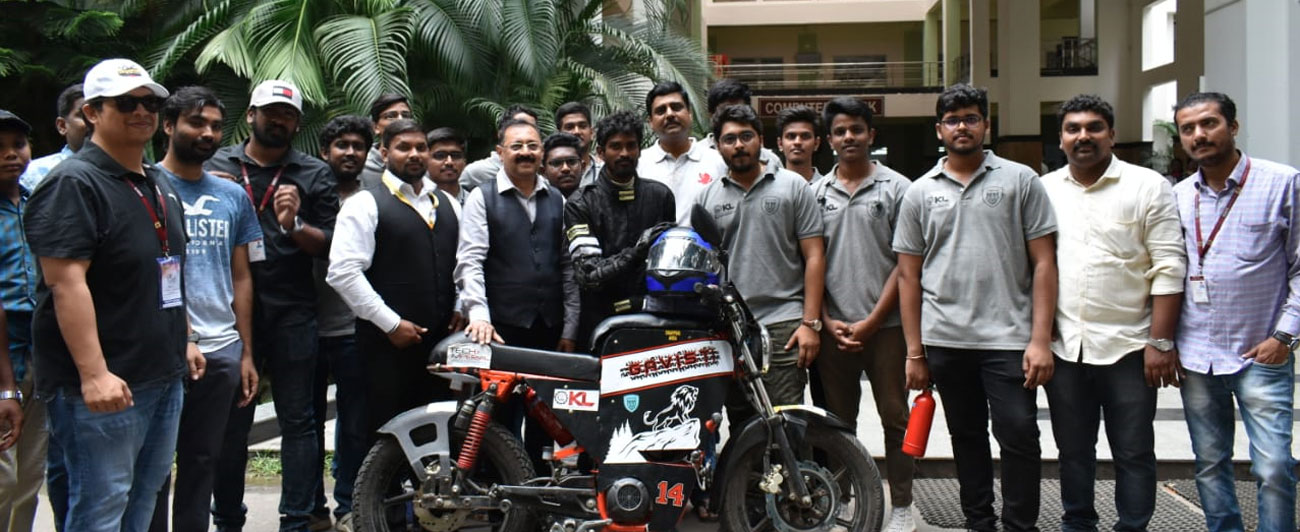
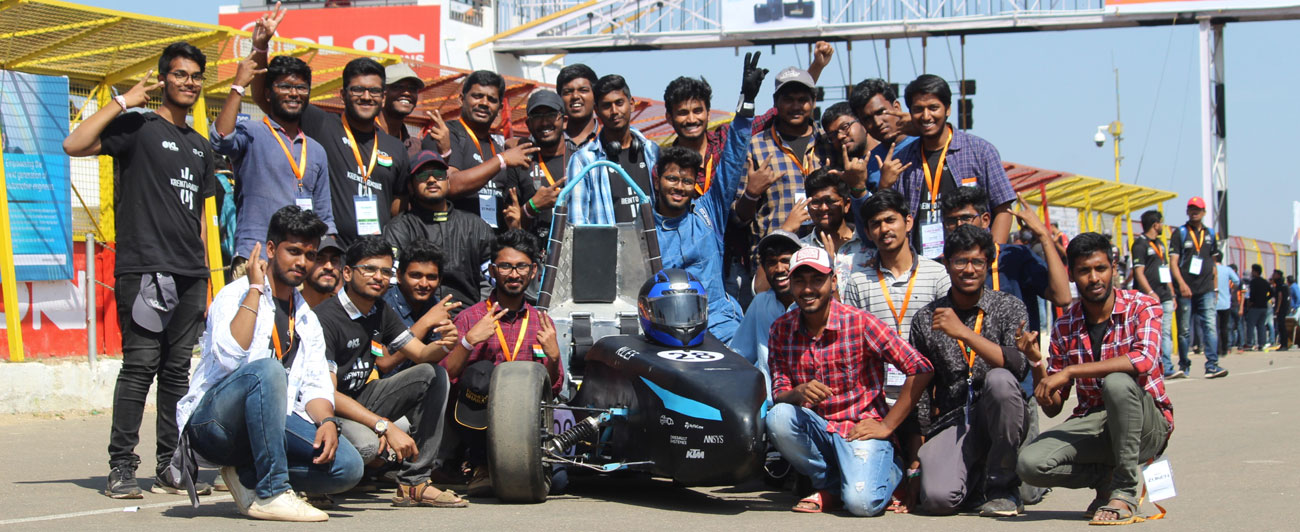
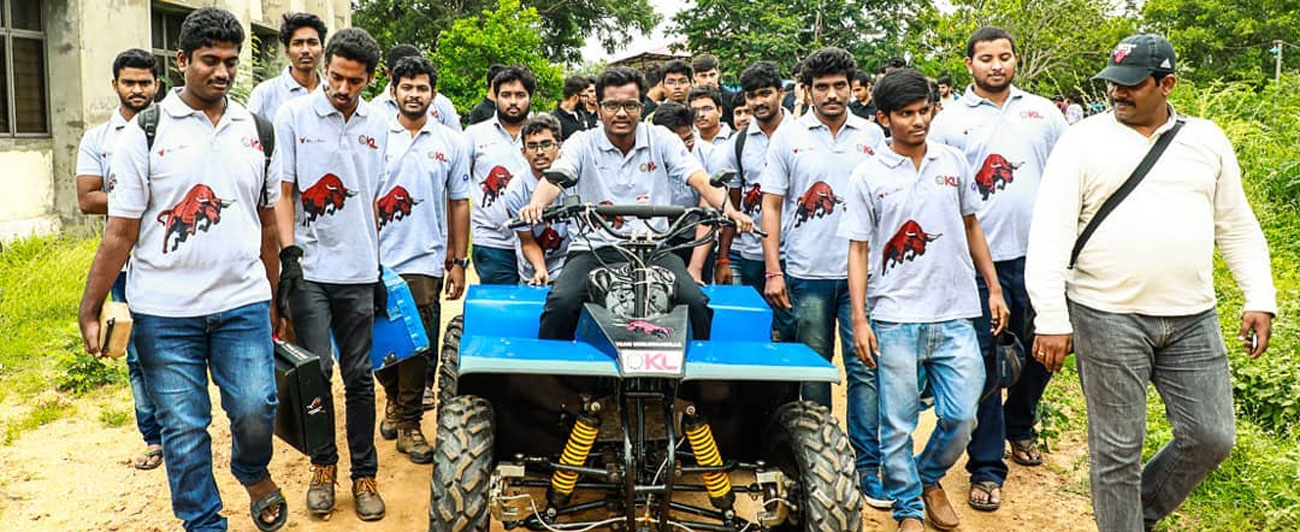
4.We provide full fledge Design and Fabrication facility (Fab Lab, Central Fabrication Unit - PIT) that consist of all infrastructure, equipment, hardware and software necessary for students to design their own projects and build prototype models, this is main advantage using which our students are able to compete globally in competitions like: Asian E-Bike Challenge, Hybrid Vehicle Challenge, Go Karting, HPVC, Under Water Vehicle Challenge, Quad Bike, M-Baja, E-Baja, SUPRA etc organised by various Internationally recognised Professional Societies like: ASME, ISIE-India, SAE, MSME etc.
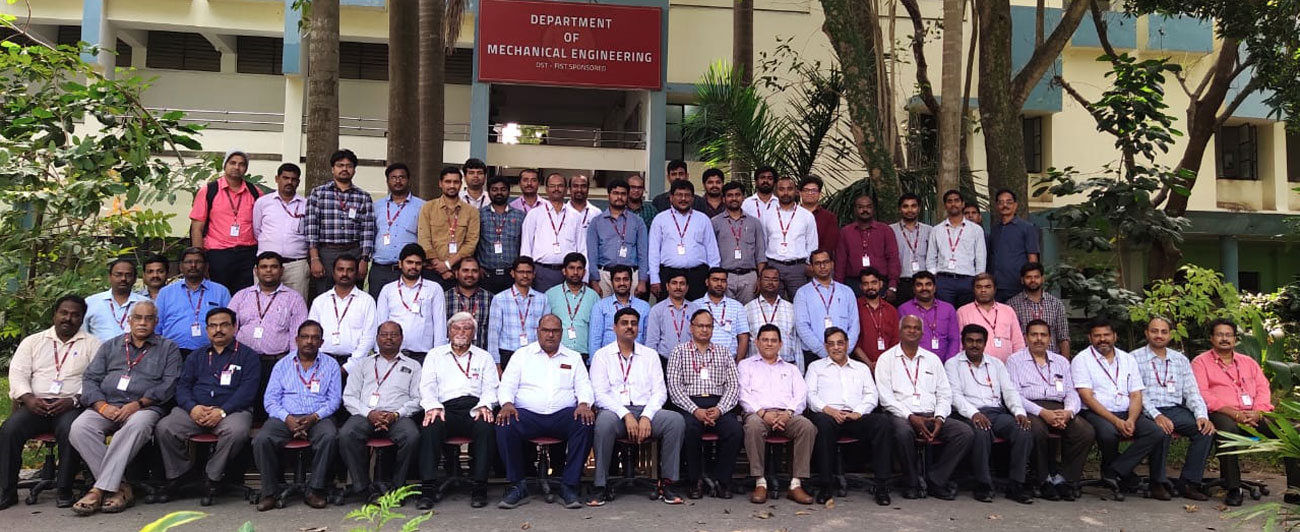
5. We have a strong backbone of 131 faculty, of which 48 faculty are with Ph.D degree and remaining all are pursuing their Ph.D, all faculty are undertaking quality Research through involvement of B.Tech. and M.Tech. students in their projects which helps our students get knowledge and practical exposure to latest research trends in mechanical engineering, helps them be a part of Papers being Published in standard SCOPUS/ SCI Indexed journals.
6. We have got very positive feed backs from Industries like FMC Technip, Hyundai Motors India Ltd, Tata Projects, L&T, Tech Mahindra, Satyam Ventures, Virtusa, Cummins, Cyient Technologies where our Alumni were placed through campus placements, and all these companies are well satisfied with knowledge and skills of our alumni which was provided to them, through our curriculum, practical knowledge in our labs and our faculty counselling.
7. Wide spectrum of industries both from core, software -IT and ITES are coming forward every year and demanding for first slot for placements of our department students.
8. We have Centres of Excellence established with an investment of Rs.5 Crores embedding both mechanical engineering latest equipment like: 3D Printers, Coordinate Measuring Machine, 6 Degree of Freedom Industrial Robotic Manipulators, FMS set up, Condition Monitoring and Vibrations testing facilities and relevant software , hardware tools, established through funding from Government of India- Department of Science and Technology Funds and KL Deemed University Management contribution and financial support.
9. We offer Courses which are a perfect blend of both Core Mech Engg as well as Computer science courses like, C, C++, Java,Python, Data Structures, Machine Learning and Artificial Intelligence and Robotics and Mechatronics.
We are proud to have companies visiting our campus for placements, like:
Cyient Technologies, FMC Technip, Mahindra, Tata Projects, Hyundai, Transpac, Thermax, Thermadyne, Essar, L&T, Ashok Leyland, John Deer, Mercedes Benz...... and also software giants Infosys, Microsoft, Google,Facebook, Wipro, TCS, CTS, Virtusa,Cummins, Tech Mahindra, Satyam Ventures, Amazon, Tata Steels, Voith Turbo, GTI etc- all our regular annual placement companies.
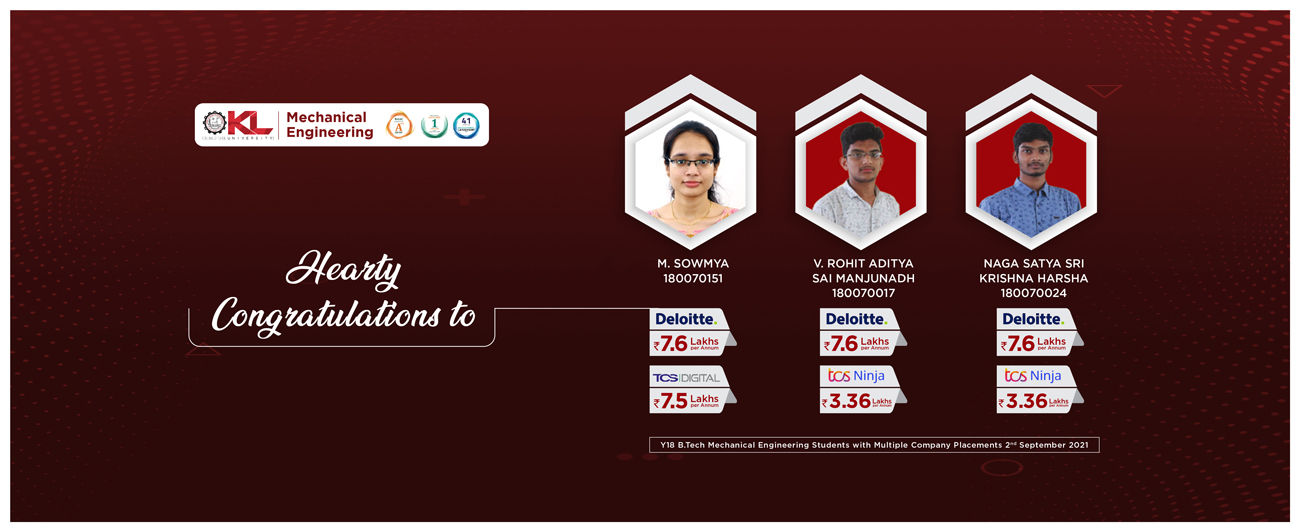
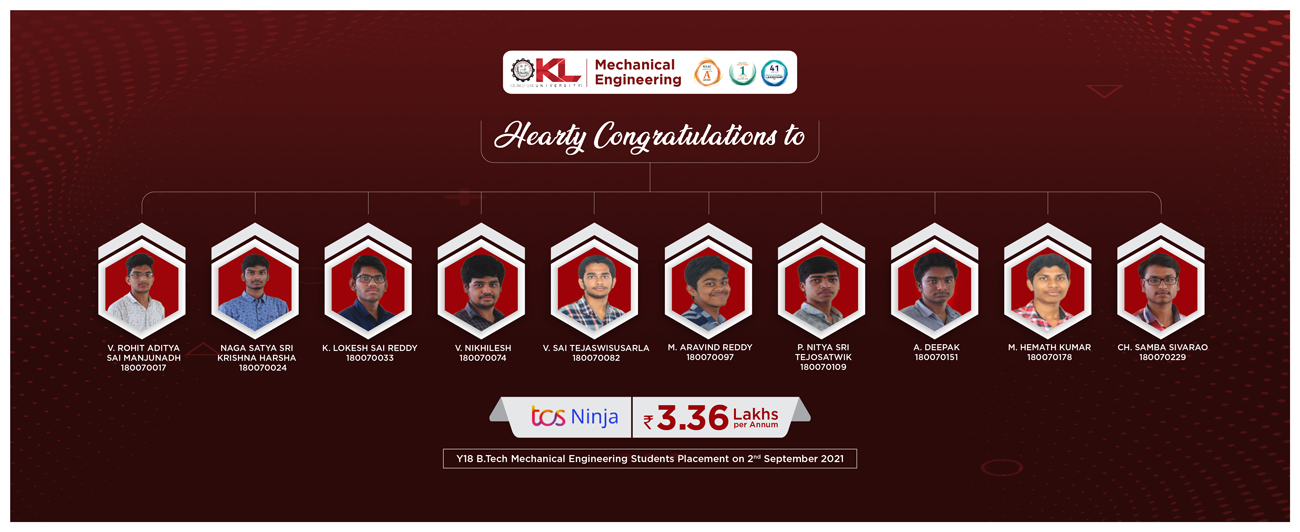
In 2019-20, till date, average pay package is Rs.4.15 Lakhs per annum, with 127 offers received and 45 students getting more than 2 offers. In 2018-19 and 2017-18 average pay package is Rs.3.75 Lakhs per annum, Highest Pay Package is Rs.8 lakhs per annum. 99 Students got placed in more than one company, 58 of them got placed in companies that offer more than Rs.4.5. Lakhs per annum pay package. Total 233/ 233 students got placed, making our 100% placements track record consecutively for 15th year.
Joining Mechanical Engineering at KL is the best possible option for aspiring Engineers to fulfil their passion in Engineering, Design and get well settled in their chosen career.
Welcome to the aspirants for 2018-19 admissions students


_Artboard.jpg)