Engineering vs General Degree: What Students Regret Later
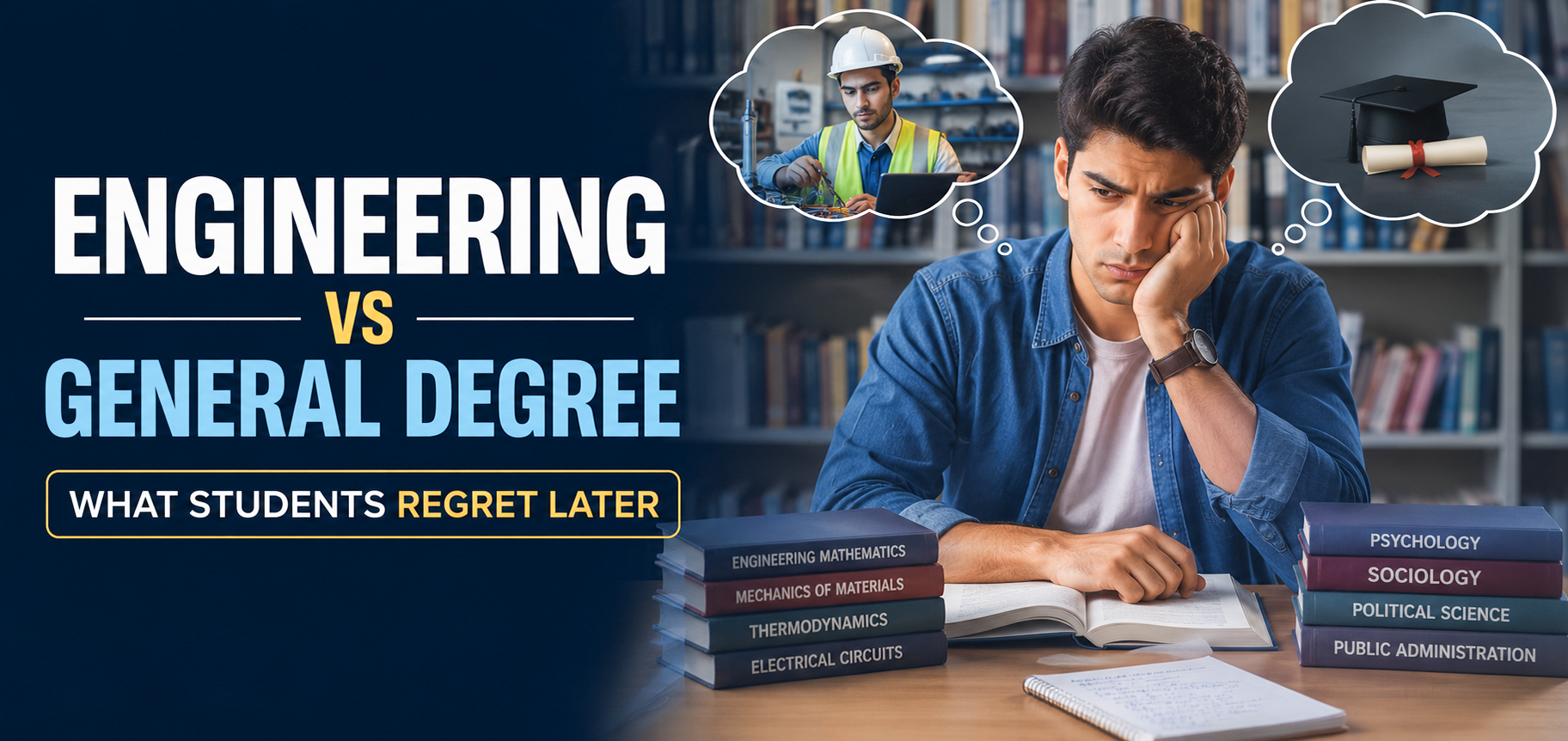
Choosing a course after Class 12 is one of the most important academic decisions a student will make. While some students opt for professional programs like engineering, others choose general degree programs in arts, science, or commerce. Both paths offer opportunities, but they also come with different expectations, career trajectories, and challenges.
As students evaluate their options, questions such as "engineering vs general degree" and "which course offers better long-term opportunities?" often become central to the decision-making process. Understanding the advantages, limitations, and future prospects of each path can help students make a more informed choice.
Engineering vs General Degree – Which Offers Better Career Growth?
Career growth depends on multiple factors, including individual interests, industry demand, skill development, and educational choices. However, engineering programs often provide structured pathways into industries such as technology, manufacturing, infrastructure, electronics, and emerging digital sectors.
General degree programs, on the other hand, offer broader academic exposure and can lead to careers in education, administration, media, public services, finance, and business.
When considering "engineering or degree which is better," students should focus on:
- Career goals
- Industry demand
- Skill requirements
- Higher education opportunities
- Long-term growth potential
There is no one-size-fits-all answer, but understanding future opportunities can help students choose more confidently.
Do Engineering Students Regret Their Degree Later in Life?
A common perception is that engineering students often regret their choice because of academic rigor or changing interests. In reality, regret is usually linked to choosing a field without fully understanding career opportunities and personal interests.
Students who select engineering because it aligns with their strengths and career aspirations often find value in the technical knowledge, problem-solving abilities, and professional opportunities it provides.
Those who are still exploring various career paths can refer to our blog, "Top Career Options After 12th in 2026," which discusses emerging industries, future-focused careers, and factors to consider before choosing a degree program.
Engineering graduates also continue to benefit from strong engineering placements in India, particularly in technology-driven sectors where demand for skilled professionals remains high.
Common Regrets Students Have After Choosing Engineering
While many engineering graduates build successful careers, some students do experience regrets during or after their BTech journey. In most cases, these regrets are not about engineering itself but about the decisions made before and during the course.
Some of the most common concerns include:
- Choosing a specialization without proper research: Many students select a branch based on trends, peer influence, or cut-off scores instead of their interests and long-term career goals.
- Lack of practical experience: Focusing only on academics without participating in internships, projects, coding competitions, or industry certifications can make the transition to employment more challenging.
- Unrealistic expectations about placements: Some students expect high-paying jobs immediately after graduation without developing the technical and soft skills employers seek.
- Not exploring emerging technologies: Engineering fields evolve rapidly, and students who do not stay updated with advancements in areas such as artificial intelligence, data science, cloud computing, and cybersecurity may miss valuable career opportunities.
- Limited career planning: Waiting until the final year to think about internships, higher education, or career paths can reduce the number of opportunities available after graduation.
The good news is that these challenges are avoidable. Students who choose the right engineering specialization, actively build technical and practical skills, complete internships, and continuously upgrade their knowledge are more likely to enjoy rewarding careers. Engineering remains one of the most versatile degrees, offering opportunities across technology, manufacturing, research, consulting, entrepreneurship, and many other industries.
Technical Skills vs Transferable Skills – What Matters More Today?
One of the major differences between engineering and general degree programs is the emphasis on technical expertise.
Engineering programs typically focus on:
- Technical knowledge
- Analytical thinking
- Problem-solving
- Programming and digital skills
- Project-based learning
General degree programs often strengthen:
- Communication skills
- Critical thinking
- Creativity
- Research abilities
- Adaptability
In today's job market, employers increasingly value both technical and transferable skills. Students who combine domain expertise with communication, teamwork, and leadership abilities often enjoy stronger career prospects.
Is Engineering Still a Strong Career Choice for Students?
Despite rapid technological changes and the rise of Artificial Intelligence, engineering continues to offer strong career opportunities across multiple industries.
Some of the fastest-growing engineering domains include:
- Artificial Intelligence and Machine Learning
- Data Science
- Cybersecurity
- Robotics and Automation
- Cloud Computing
- Electronics and Communication Technologies
The engineering future scope remains promising for students who continuously update their skills and adapt to emerging industry trends.
Students exploring engineering pathways should also review B Tech eligibility criteria, specialization options, and industry demand before applying to programs.
How General Degree Students Build Successful Careers Across Industries
A general degree does not limit career growth. Many successful professionals have built rewarding careers after completing degrees in arts, commerce, or science.
General degree graduates often pursue careers in:
- Business and management
- Government services
- Education
- Media and communications
- Public policy
- Finance and accounting
- Entrepreneurship
Success depends less on the degree title and more on the skills, experience, and professional development students pursue throughout their academic journey.
This is why the question "is general degree better than engineering" often depends on individual career goals rather than a universal answer.
How to Choose Between Engineering and General Degree With Confidence?
Students should avoid making decisions based solely on peer influence, trends, or societal expectations. Instead, they should evaluate:
- Personal interests and strengths
- Career aspirations
- Industry demand
- Learning preferences
- Long-term growth opportunities
Students interested in technology, innovation, and problem-solving may find engineering a better fit, while those who prefer broader academic exploration may thrive in general degree programs.
When comparing engineering vs degree which is better for career, the most important factor is choosing a path that aligns with both your interests and future goals.
For students considering engineering, researching engineering admissions in Andhra Pradesh, understanding available specializations, and exploring institutions recognized as a best engineering college in Andhra Pradesh can help simplify the decision-making process.
One of the key advantages of engineering education is the diversity of career opportunities available after graduation. Depending on their specialization, interests, and skills, BTech graduates can explore careers in software development, artificial intelligence, manufacturing, electronics, consulting, research, and emerging technologies. With India's rapidly growing digital economy and increasing demand for engineering talent, graduates have opportunities across startups, multinational corporations, government organizations, and research institutions.
Popular Career Opportunities After BTech
| Career Opportunity | Primary Job Role | Average Salary Range (India)* |
|---|---|---|
| Software Engineer | Develop, test, and maintain software applications and systems. | ₹4–12 LPA |
| Data Scientist | Analyze large datasets to generate business insights and build predictive models. | ₹6–18 LPA |
| AI/ML Engineer | Design and deploy artificial intelligence and machine learning solutions. | ₹7–20 LPA |
| Cybersecurity Analyst | Protect systems, networks, and data from cyber threats and security breaches. | ₹5–15 LPA |
| Cloud Engineer | Build, manage, and optimize cloud infrastructure and services. | ₹6–18 LPA |
| Product Developer | Design, develop, and improve technology products from concept to launch. | ₹5–16 LPA |
| Robotics Engineer | Develop robotic systems, automation solutions, and intelligent machines. | ₹5–14 LPA |
| Research Associate | Conduct technical research, innovation, and product development projects. | ₹4–10 LPA |
| Technology Consultant | Advise organizations on implementing technology solutions to improve business performance. | ₹6–18 LPA |
| Entrepreneur | Build and scale technology-based startups or innovative businesses. | Earnings vary based on business growth |
*Salary ranges are approximate and may vary depending on specialization, skills, location, employer, and work experience.
Beyond these roles, engineering graduates can also pursue higher education such as MTech, MBA, or MS programs, prepare for competitive examinations like GATE, UPSC Engineering Services, and PSU recruitment, or earn industry-recognized certifications in cloud computing, cybersecurity, data analytics, artificial intelligence, and project management to enhance their career prospects. Continuous learning and practical experience remain key factors in building a successful engineering career.
Sources
- National Association of Software and Service Companies (NASSCOM): https://nasscom.in
- AmbitionBox Salary Insights: https://www.ambitionbox.com/salaries
- Glassdoor India Salaries: https://www.glassdoor.co.in/Salaries
- Indeed India Career Guide: https://in.indeed.com/career-advice
- All India Council for Technical Education (AICTE): https://www.aicte-india.org
These salary estimates are compiled from industry salary reports and leading employment platforms and should be considered indicative rather than fixed figures.
Conclusion
Choosing between engineering and a general degree is not about identifying a universally better option, it is about selecting a path that aligns with your interests, abilities, and long-term aspirations.
Engineering offers structured technical education, strong industry demand, and diverse career opportunities, while general degree programs provide flexibility and pathways into a wide range of professions. Students who take the time to understand career outcomes, skill requirements, and industry trends are more likely to make confident and rewarding decisions.
Ultimately, success depends not only on the degree you choose but also on the skills you develop, the opportunities you pursue, and your willingness to continuously learn and adapt.