Sustainable Development Goals (SDG)

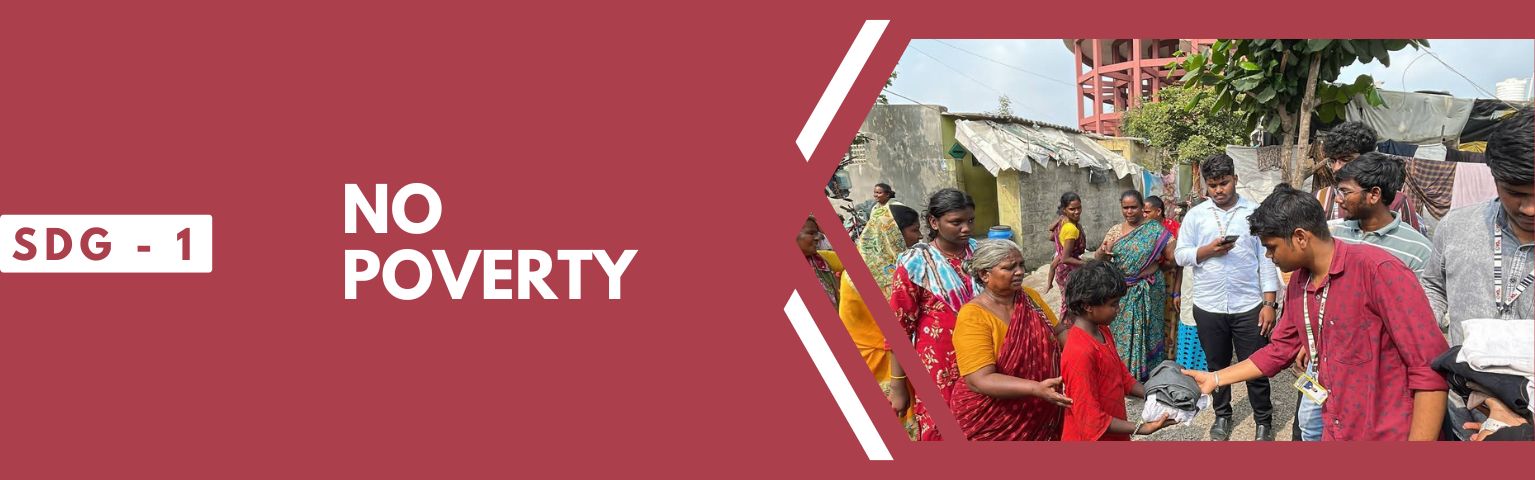
Poverty remains one of the world’s most persistent development barriers, influencing inequality, restricting access to basic services and weakening resilience among vulnerable populations. Although the world has witnessed progress across several social indicators, extreme poverty continues to affect millions, creating widening socio-economic divides. Updated global poverty thresholds have revealed higher estimates of international poverty, underscoring the need for stronger poverty eradication policies, inclusive social protection systems and targeted investment in essential services. In this global context, KL Deemed-to-be University strengthens its strategic action aligned with SDG 1 to support low-income communities, promote equity, and reinforce long-term resilience.
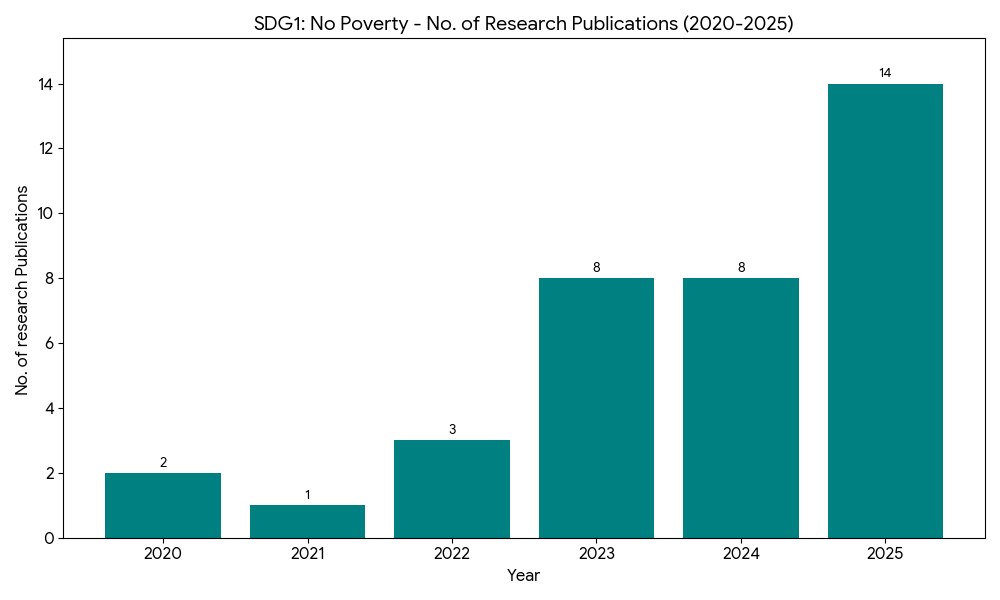
KL Deemed-to-be University has significantly contributed to SDG-1 No Poverty through research, with numerous paper publications focused on addressing poverty-related challenges over the past five years. These scholarly works reflect the institution’s commitment to knowledge creation, poverty analysis, and evidence-based solutions aligned with global SDG frameworks.
Extreme poverty continues to remain a concern despite decades of global development advancements. With the revised international poverty line of $3.00 (2021 PPP), global poverty numbers have increased, reflecting the ongoing impact of post-pandemic recovery challenges, economic disruptions and climate shocks. In 2025, nearly 1 in 10 individuals worldwide are still expected to live in extreme poverty. Furthermore, national poverty trends reveal that only a limited number of countries are on track to halve poverty by 2030, highlighting shortcomings in targeting vulnerable groups and insufficient government spending on essential services. These realities emphasise the need for expanded social protection coverage, stronger institutional capacity and sustained investments that uplift the poorest populations.
While more than half of the global population now benefits from at least one form of social protection, an estimated 3.8 billion people remain uncovered. This gap is even more prominent in low-income countries where deficits in government spending restrict access to education, healthcare, sanitation, digital services and disaster preparedness systems. Ensuring equitable access to basic services calls for renewed commitments from governments, institutions and communities to design inclusive social systems and create safety nets that are resilient to crises.
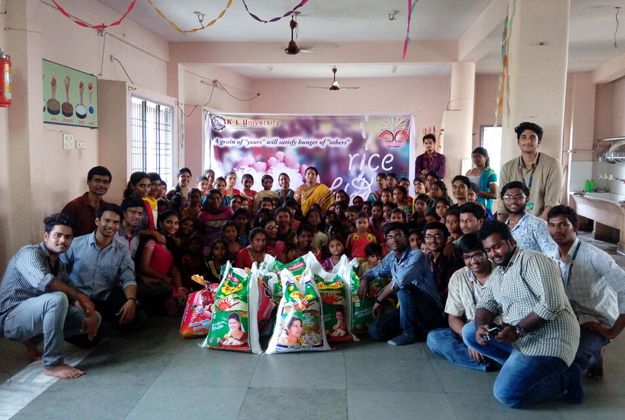
KL Deemed-to-be University integrates SDG 1 principles across its academic policies, campus governance and outreach initiatives. The university’s approach to poverty reduction is rooted in fairness, sustainability and inclusive access, ensuring that individuals from the bottom 20% of household income groups are provided with opportunities to study, grow and thrive. As part of its commitment, the university enhances its admission systems to improve the representation of economically backward classes (EBC), continuously working toward structured targets that increase enrolment from this segment. Simultaneously, KL University strengthens program completion outcomes for these students by embedding academic mentoring, counselling and personalised support into the learning environment.
Through scholarships, fee waivers and emergency assistance packages, the institution ensures that financial hardship does not hinder students’ educational progress. These support mechanisms act as internal social protection measures, designed specifically to eliminate financial barriers and help vulnerable students complete their degrees on time. By integrating these actions directly into academic planning and student services, the university contributes to national poverty reduction efforts by ensuring that first-generation learners and low-income families have consistent pathways to success.
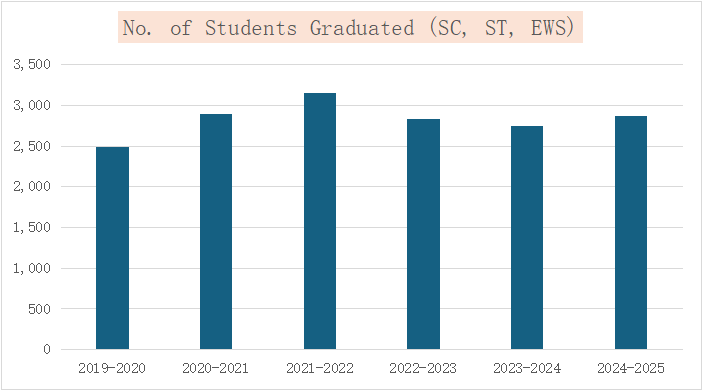
The university’s commitment is further demonstrated through measurable outcomes, including a significant Number of Students Receiving Financial Aid (SC, ST, EWS) and an increasing Number of Students Graduated (SC, ST, EWS) each year. These indicators highlight KL University’s role in supporting marginalised communities through accessible education and sustained academic assistance.

KL University maintains ethical procurement practices that prioritise fair trade and responsible sourcing. These supply chain standards help reduce exploitation and promote equitable economic development, especially for workers and small-scale suppliers. The university also embeds Environment, Social and Governance (ESG) principles in its investment strategies, encouraging socially responsible decision-making across administrative and financial operations. By enhancing supplier transparency, strengthening compliance practices and expanding ESG-based monitoring systems, the university aligns its internal governance with global priorities aimed at reducing systemic poverty and supporting sustainable growth.
Recognising that higher education can be a transformative mechanism for breaking intergenerational poverty cycles, KL University has placed strong emphasis on structured support for low-income students. Admission reforms increasingly target learners from marginalised income groups, while scholarship schemes and support packages ensure equal access to learning resources, high-quality education and essential academic tools. Beyond financial assistance, the university extends psychological support, academic mentoring and skill-based guidance to improve retention among students from the bottom 20% income tier. These integrated measures allow vulnerable students to transition smoothly from enrollment to graduation, thereby improving their long-term earning capacity and reducing the risk of poverty recurrence.
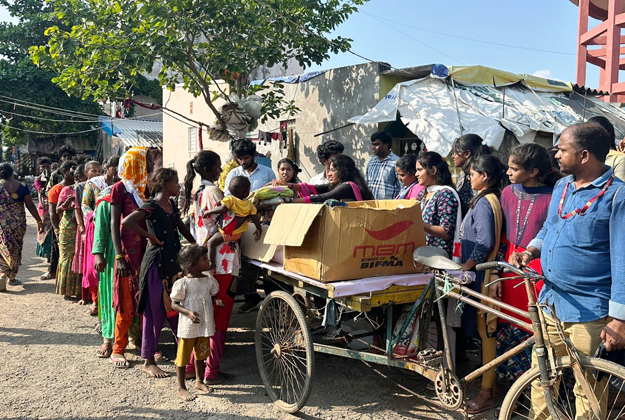
KL University plays a proactive role in strengthening community-level economic resilience through its Centre for Innovation, Incubation and Entrepreneurship (CIIE). The centre not only nurtures student innovation but also supports local community members in building sustainable livelihood opportunities. By offering training, mentorship and capacity-building workshops, the university helps aspiring entrepreneurs particularly those from low-income households develop viable business models. Efforts are underway to expand incubator programs to include targeted financial support such as micro-grants and seed funding for startups, enhancing community members access to entrepreneurial opportunities and improving economic self-reliance.
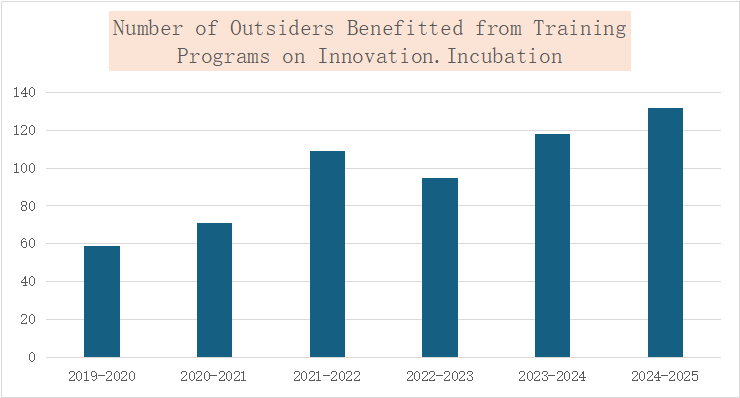
As part of its outreach efforts, the university has supported a growing Number of Outsiders Benefitted from Training Programs on Innovation and Incubation, extending entrepreneurship knowledge and innovation skills to marginalised communities and local beneficiaries beyond the student population.
The university conducts training programs in digital literacy, financial literacy, essential life skills, social entrepreneurship and sustainable livelihoods to empower local communities and enhance their access to basic services. These programs are crucial for building resilience among vulnerable groups, enabling them to adapt to changing economic conditions and adopt innovative livelihood practices. KL University is committed to expanding the frequency, reach and impact evaluation of these programs to ensure greater benefit for marginalised communities.
KL University's faculty, research centres and policy groups contribute to national dialogues and policymaking processes related to poverty reduction, social protection and community development. Through research papers, consultations, government collaborations and evidence-based recommendations, the university strengthens its role in shaping progressive policies. Efforts continue to enhance documentation, visibility and engagement in policymaking initiatives to amplify the university’s contributions to national poverty alleviation frameworks.
In alignment with global calls for enhanced disaster preparedness, the university undertakes programs to build awareness, strengthen campus safety and support community resilience. Training sessions on climate risks, emergency response and disaster management equip students and community groups with the knowledge and skills required to navigate environmental and economic shocks key contributors to poverty in vulnerable regions.
Poverty eradication requires collective action supported by ethical governance, inclusive policies and strong community partnerships. KL Deemed-to-be University demonstrates its commitment to SDG 1 by empowering low-income students, promoting ethical procurement, strengthening community entrepreneurship, expanding training for essential services and contributing to national policymaking processes. Through these sustained efforts, the university continues to reduce inequalities, build resilience and contribute to a future where poverty is eliminated in all its forms.