Sustainable Development Goals (SDG)

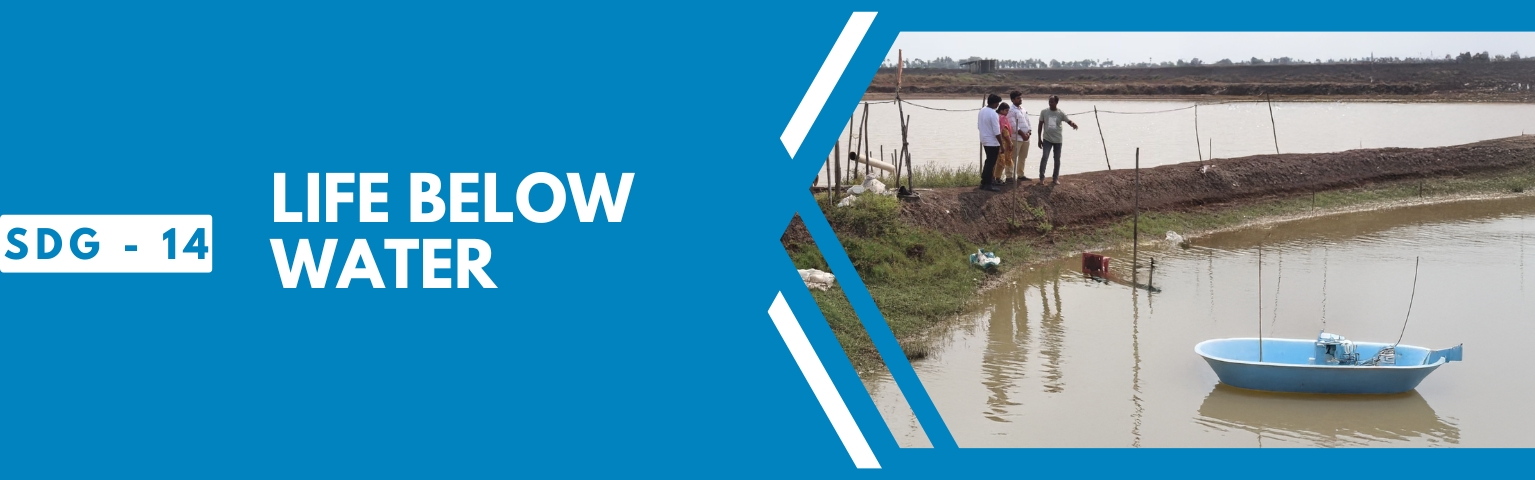
KL University continues to strengthen its commitment toward the Sustainable Development Goals by contributing meaningfully to global marine sustainability efforts under SDG 14: Life Below Water. This goal emphasises the conservation and sustainable use of oceans, seas and marine resources, and KL University recognises its vital role in addressing marine pollution, ocean acidification, sustainable fishing, conservation of coastal and marine ecosystems, the protection of marine resources for SIDS and LDCs, and the advancement of research capacity and marine technology. Through ongoing academic, research, community engagement and environmental stewardship initiatives, the university not only supports marine conservation but also aligns its actions with global priorities, including implementing UNCLOS principles and strengthening small-scale artisanal fishing communities through knowledge sharing and outreach.
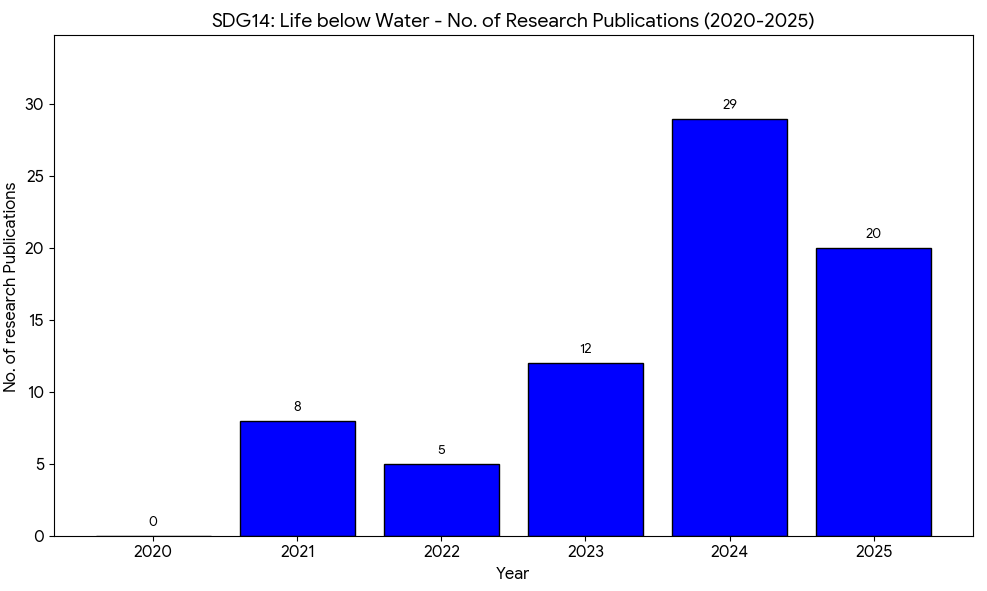
KL University also contributes significantly to SDG-14 through a growing number of publications on marine ecology, marine pollution, aquatic biodiversity conservation and sustainable ocean management.
KL University places strong emphasis on enhancing research capacity and marine technology to address emerging challenges related to oceans and coastal environments. The university conducts dedicated research programs on marine biodiversity, marine pollution, coral reef stress, ocean acidification and conservation practices, fully aligning with the global call to improve scientific knowledge. These research projects aim to understand complex marine and coastal ecosystems and create practical solutions for sustainable marine resource management. The university’s research scholars have developed innovative studies on microplastic pollution, water contamination sources and climate-driven changes in freshwater and coastal systems. These initiatives directly support the metric evaluating whether the university conducts research on marine conservation, and KL University continues to expand this work each year by initiating new research projects designed to support long-term marine ecosystem resilience.
The university’s research excellence is further reflected in its annual publications dedicated specifically to SDG-14: Life Below Water, contributing to scientific insights on marine sustainability.
Recognising that effective marine conservation requires multisectoral cooperation, KL University has established robust collaborations with national and international organisations working on marine sustainability. These partnerships strengthen the university’s contribution to the broader goals of sustainable fishing, conservation of coastal and marine areas, and responsible management of marine resources. Through academic exchange programs, collaborative projects, and joint seminars, the university partners with marine institutes, environmental organisations and universities specialising in ocean studies. This fulfills the requirement for collaborations on ocean-related SDGs and reflects the global call for shared marine technology and international cooperation to support developing countries, including SIDS and LDCs. These collaborations place KL University within a global network addressing ocean governance, responsible fisheries management and ocean literacy.
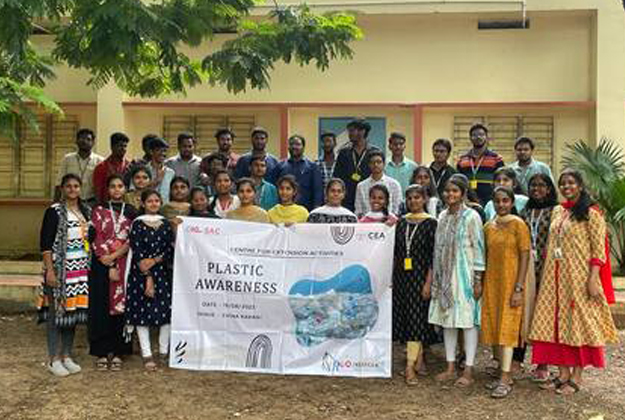
Awareness is critical to preserving marine and coastal ecosystems, and KL University takes pride in conducting consistent and impactful awareness programs. These programs educate students, staff and local communities about marine biodiversity, the dangers of marine pollution, the need to protect coral reefs, and the importance of adopting sustainable fishing practices. Sessions also address threats such as illegal, unreported and unregulated fishing, ocean acidification, habitat degradation and the importance of coastal conservation. The university organises campaigns, workshops, exhibitions, marine-themed events and student challenge programs to reinforce marine ecosystem protection. These efforts fully satisfy the metric regarding awareness promotion and contribute to a stronger environmental culture across campus.
KL University recognises that clean water systems within and around the campus play a vital role in maintaining healthier freshwater and marine ecosystems. The university has implemented water quality monitoring initiatives that operate throughout the year. A trained environmental engineering team, along with student volunteers, monitors water harvesting structures, stormwater drains, campus ponds and any nearby water bodies. Regular analysis includes checking pH level fluctuations that relate to ocean acidification trends, assessing contamination levels and evaluating the ecological health of stored water. These findings are used to develop targeted interventions to prevent pollution and support conservation of both terrestrial and freshwater linkages to marine environments. These initiatives align directly with the metric requiring continuous water quality monitoring and demonstrate KL University’s strong commitment to water conservation and sustainable ecosystem management.
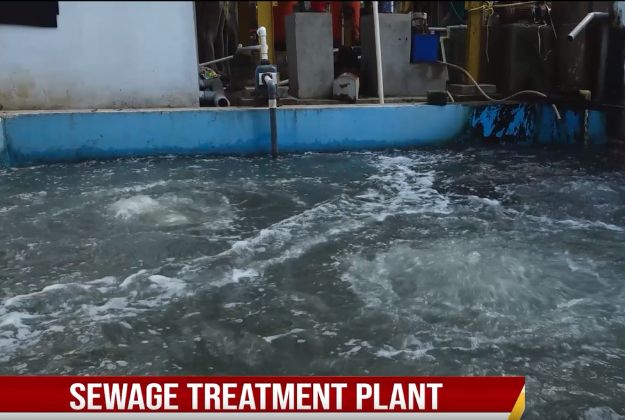
KL University maintains comprehensive policies that aim to minimise water pollution on campus by implementing effective wastewater management and adopting eco-friendly practices. The university uses rainwater harvesting systems to prevent runoff and enhance groundwater recharge, while treated water is used efficiently for landscape maintenance through an automated sprinkler irrigation system, reducing wastage and preventing contamination of nearby water bodies. These actions contribute to reducing chemical discharge, preventing plastic waste flow into canals and limiting pollutants that may harm downstream marine environments. Through these proactive measures, KL University meets the metric on establishing water pollution reduction policies and demonstrates its alignment with global values of marine resource protection and responsible consumption.
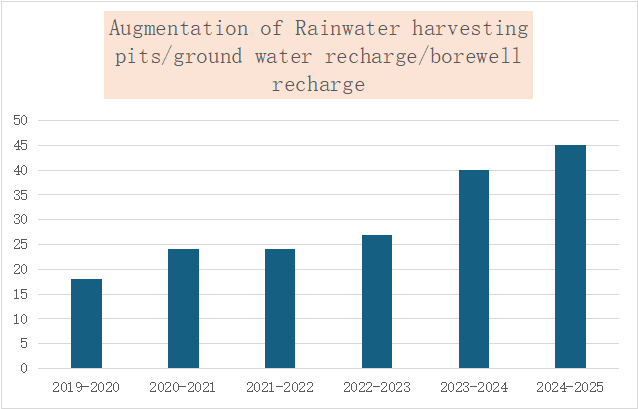
As part of its water sustainability initiatives, KL University has also undertaken significant Augmentation of Rainwater Harvesting Pits / Groundwater Recharge / Borewell Recharge systems to support long-term hydrological balance and marine ecosystem protection.
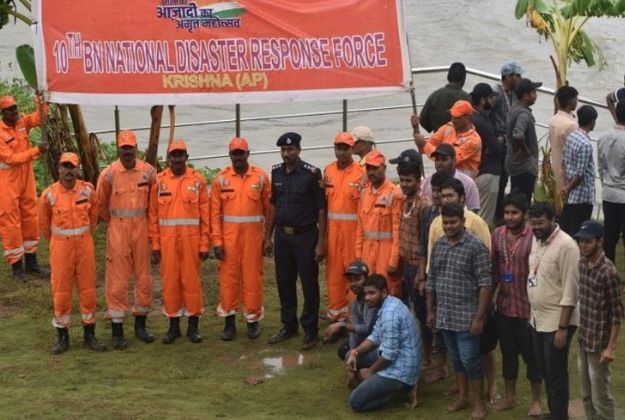
One of KL University’s most impactful contributions toward protecting marine and coastal ecosystems is its active involvement in coastal cleanup drives. Students participate in well-organised events at beaches, canals, lakes and riverbanks, where they remove waste, segregate recyclable materials and document pollution sources. These drives are conducted in partnership with municipal bodies, NGOs and environmental clubs, fulfilling the metric related to coastal cleanup initiatives. In addition to hands-on cleanup activities, student teams engage with local residents to raise awareness about maintaining clean water bodies, preventing littering and protecting aquatic life. These programs empower communities, support small-scale artisanal fishing groups by protecting their water resources, and contribute to conservation of coastal and marine areas. The university emphasises that safeguarding marine resources requires collective responsibility, and these outreach activities embody that principle.
KL University has also produced several publications linked to marine cleanup, pollution tracking and coastal ecosystem restoration.
The university integrates sustainability themes into academic courses, research activities and institutional policies, ensuring that marine conservation remains a core educational value. Through curriculum modules, experiential learning programs and sustainability-driven student projects, KL University promotes understanding of marine pollution, ocean acidification, sustainable fishing frameworks, fisheries subsidies reforms, and conservation of marine ecosystems. The university also aligns its approach with international standards, including principles of implementing UNCLOS, reflecting a responsible and globally aligned institutional strategy.
The university’s academic portfolio continues to expand with SDG-14-focused publications covering marine governance, UNCLOS implications and sustainable fisheries.
KL University’s work under SDG 14 reflects a holistic, proactive and deeply responsible approach to protecting life below water. By enhancing research capacity, building strong collaborations, promoting marine ecosystem awareness, monitoring water quality, reducing pollution, and organising coastal cleanup drives, the university has established a powerful model of academic leadership in marine sustainability. Every initiative reinforces the global commitment to healthier oceans, thriving coastal ecosystems and resilient marine biodiversity. KL University remains dedicated to advancing sustainable ocean stewardship and will continue expanding its contributions to marine research, technology, conservation and community engagement in the years ahead.
The university continues to increase its SDG-14 publication output annually, strengthening its role in global marine sustainability research.