Sustainable Development Goals (SDG)

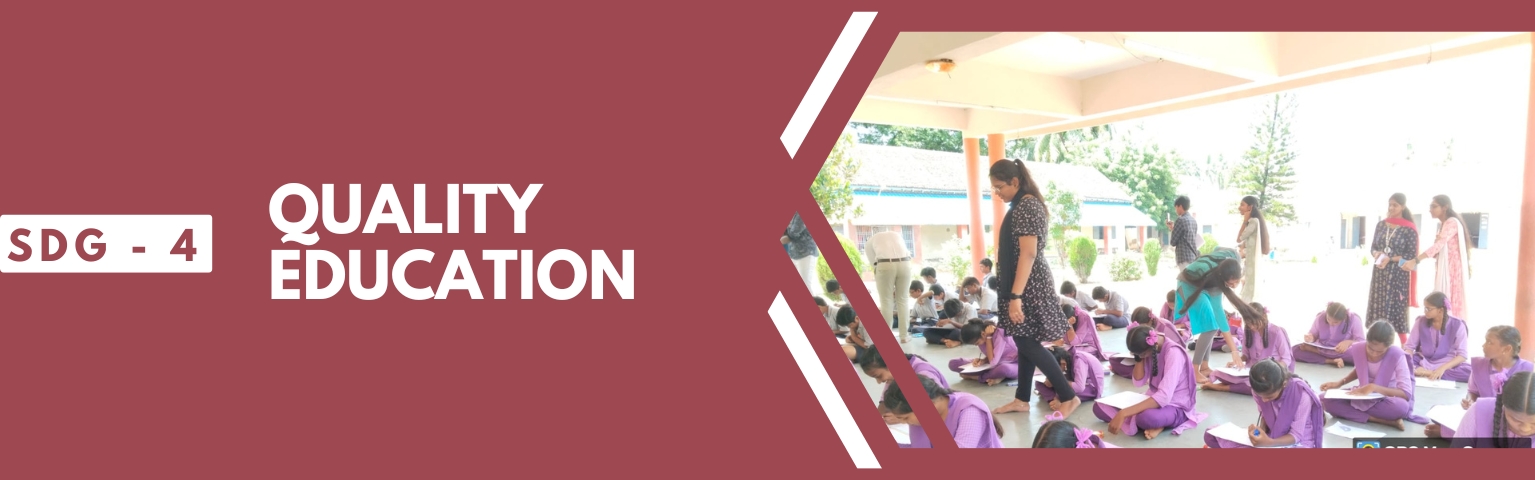
Quality education remains a central pillar of sustainable development, yet global progress continues to fall short of the targets set under SDG 4. Although enrolment and completion rates have improved since 2015, the pace of advancement has slowed, and millions of children and youth remain out of school. Learning outcomes in many countries are stagnant or declining, and deep inequalities rooted in gender, wealth, disability and geography continue to affect access to quality learning. Against this global backdrop, institutions must strengthen their strategies to enhance effective learning outcomes and ensure equitable, inclusive and lifelong learning opportunities for all.
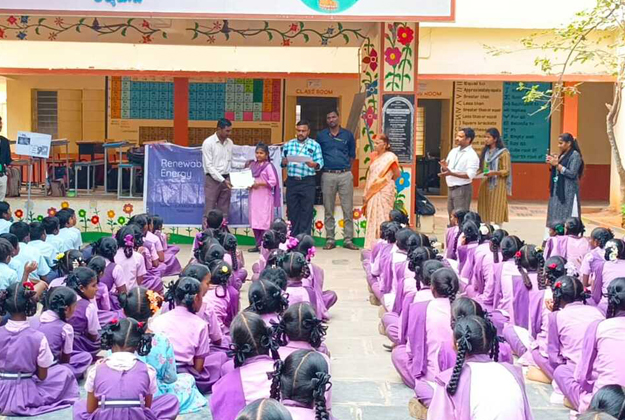

KL Deemed-to-be University is proactively responding to these challenges by aligning its academic systems, community engagement strategies and campus infrastructure with the SDG 4 framework. Through inclusive admissions, community literacy initiatives, modern education facilities, digital empowerment, and high-quality teaching practices, the university positions itself as a key contributor to sustainable development education and lifelong learning for diverse population groups.
The University has also produced significant research publications aligned with SDG-4: Quality Education, with the number of research publications generated over the past five years showcasing its academic commitment to educational advancement.
Worldwide, the education sector faces widening gaps. Despite progress, 272 million children and youth remained out of school in 2023. Global completion rates improved to 88% for primary, 78% for lower secondary and 60% for upper secondary education by 2024, yet progress has slowed compared to earlier years. Gender parity has improved at the global level, with girls outperforming boys in completion, but regional disparities persist particularly in low-income countries where 36% of school-aged learners are still out of school.
Learning quality poses another concern. Minimum proficiency in foundational literacy and numeracy remains low in several regions. In many countries, less than half of primary learners meet minimum expectations in mathematics, and reading proficiency has declined in upper-middle-income and high-income regions. These indicators highlight the necessity for inclusive policies, stronger investments, skilled teachers and expanded early childhood education to provide equitable foundations for effective learning outcomes.
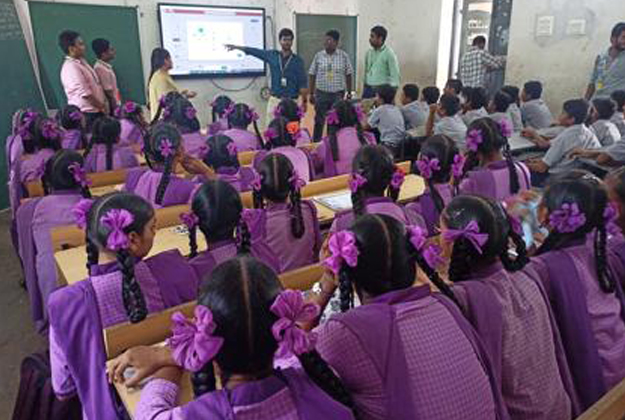
In response to these global challenges, KL Deemed-to-be University prioritises inclusive admissions and equal access to education. The university ensures representation of vulnerable and disadvantaged groups including SC, ST, OBC, tribal communities, persons with disabilities and indigenous learners by allocating seats across all programs. Through structured counselling during admissions, financial guidance and individualised support, KL University enables learners from diverse backgrounds to participate fully in formal, non-formal and technical education pathways.
The institution also offers scholarships similar in nature to ODA for scholarships, enabling students from developing regions and economically disadvantaged families to pursue higher education without financial hardship. These scholarships strengthen educational equity and promote international participation in TVET and tertiary education.
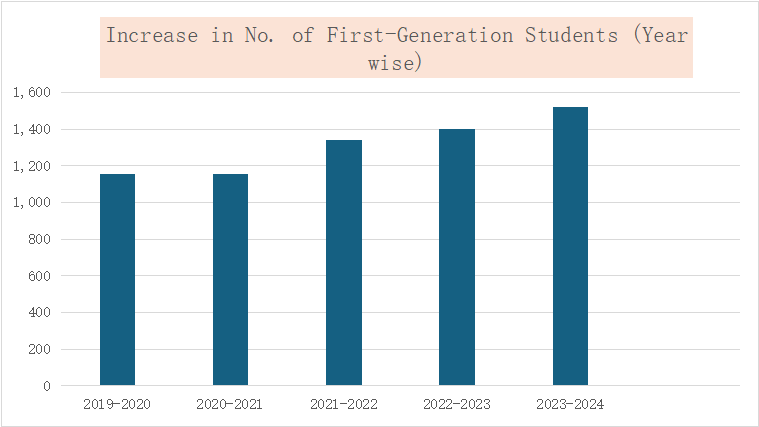
Increase in the Number of First-Generation Students reflects the institution’s commitment to widening access and supporting learners from families with no prior history of higher education.
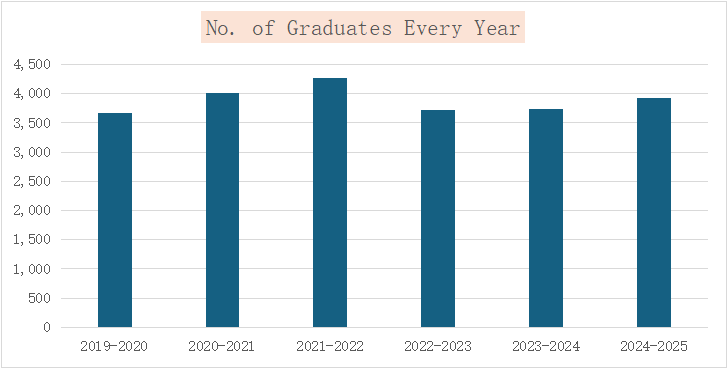
Number of Graduating Students further demonstrates the University’s success in expanding educational attainment and completion rates.
While global literacy has increased over the past two decades, adult literacy and numeracy remain major concerns, with more than 750 million adults still unable to read or write. KL University actively contributes to improving literacy and educational awareness through programs led by its Student Activity Centre (SAC). Students and faculty visit government schools to provide career guidance, share knowledge and inspire learning aspirations among children from financially challenged families.
Additionally, the university donates refurbished computers, electronic devices and study materials to schools that lack adequate resources, helping bridge the digital divide affecting early education and adolescent learning. Through these local interventions, KL University supports both youth and adults in strengthening foundational literacy and numeracy skills while promoting sustainable development education in surrounding communities.
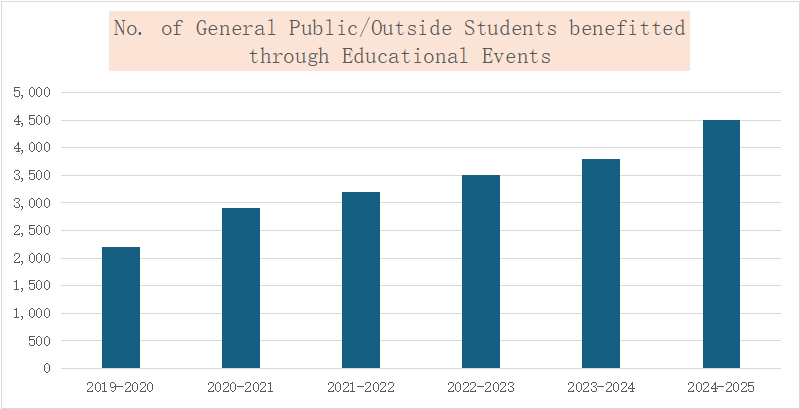
No. of General Public/Outside Students benefitted through Educational Events highlights the University’s impact beyond the campus, supporting wider community learning and outreach.
Globally, internet access has expanded rapidly, yet many individuals lack essential digital skills in areas such as data literacy, digital content creation and online safety. KL University addresses this gap by maintaining a digitally enabled campus equipped with high-speed internet to ensure the smooth running of classes and blended learning formats.
The university’s skill development centres play a significant role in enhancing skills for employment. Through training in programming, communication, entrepreneurship, AI, robotics and design, students acquire competencies relevant to modern industries. These centres support the broader agenda of TVET and tertiary education by placing skill-building at the forefront of student development.
Quality learning environments are critical for improved academic performance. Around the world, many schools especially in least developed countries still lack electricity, drinking water, computer access or disability-friendly structures. KL University, in contrast, provides advanced education facilities that support interactive and practical learning.
Key infrastructure includes:
These facilities ensure that students benefit from modern, practical, and research-driven learning experiences that align with global goals for effective learning outcomes.
The availability of qualified teachers is a major global challenge, with many countries facing shortages that directly impact learning quality. KL University addresses this by maintaining a faculty body composed of experienced educators, research scholars and industry experts who are trained to deliver outcome-based education. Students are encouraged to attend workshops, international seminars, conferences and certification programs to broaden their academic exposure. The university’s focus on practical learning ensures that theoretical knowledge is reinforced through real-world application, research experiments and hands-on projects.
Reflecting global trends, KL University’s internal literacy and learning performance indicators have shown progressive improvement year after year. The university attributes this growth to innovative teaching methods, blended learning models, digital tools, personalised mentoring and strong student support systems. These continuous advancements reinforce the institution’s commitment to achieving SDG 4 targets and contributing to society through education-driven development.
While global systems continue to struggle with disparities in access, learning quality, infrastructure and digital capability, KL Deemed to be University demonstrates how institutions can drive meaningful progress toward SDG 4. Through inclusive admissions, community literacy support, advanced learning facilities, qualified teachers, skill-based programs, and a commitment to equal education for all, the university exemplifies a model of sustainable and transformative education.