Sustainable Development Goals (SDG)

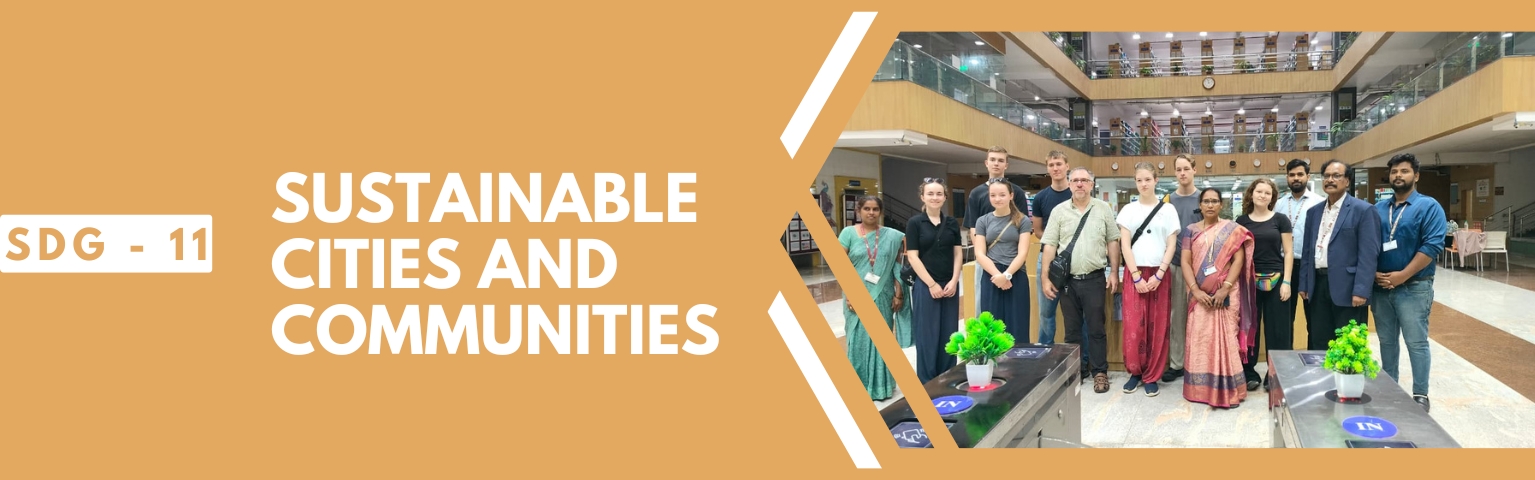
As KL University continues to expand its academic, research and community presence, the institution adopts city-level principles of inclusive planning, resilient infrastructure and sustainable mobility to shape a model campus ecosystem. Rising urbanisation around the University’s surrounding regions presents both challenges and opportunities. KL University addresses these through targeted interventions in infrastructure development, green-campus management, community engagement and research-driven urban innovation. These efforts align with the larger vision of transforming the campus into a living laboratory of sustainability that benefits both the student population and the wider community.
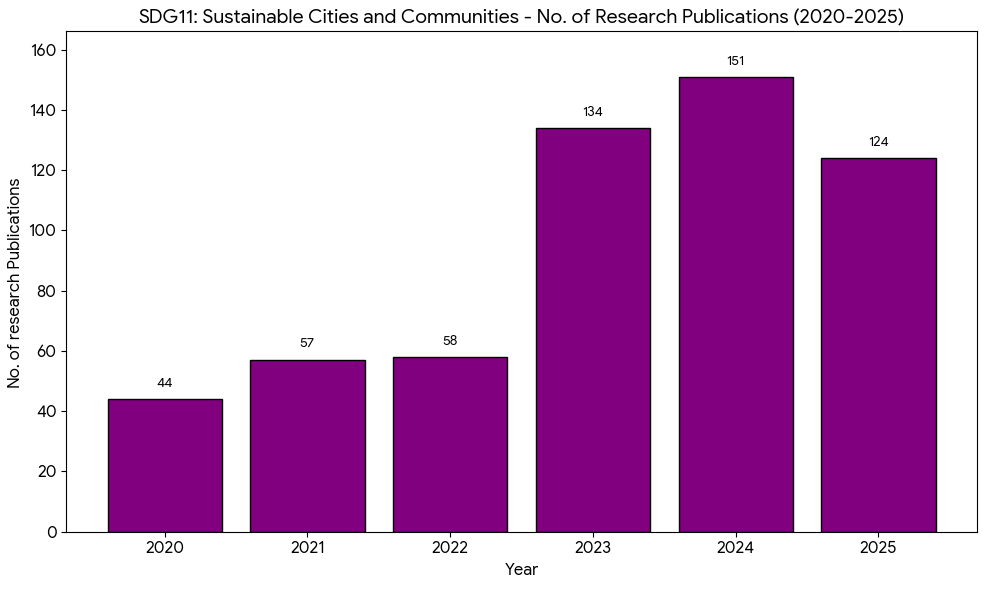
Additionally, KL University has contributed significantly to research under SDG-11, with a notable number of publications dedicated to Sustainable Cities and Communities.

To extend its contribution beyond the campus boundaries, KL University focuses on scaling up and delivering sustainable solutions to global challenges developed by the university for the wider community and industry. These initiatives reinforce equitable access to services, strengthen local economic and social systems and support regional development.
In alignment with the global emphasis on resolving the housing affordability crisis, KL University provides safe and affordable on-campus and university-supported housing options for students and staff. These facilities are designed to reduce financial burden, expand access for students from low-income households and ensure fair income distribution in living conditions. The University also partners with local authorities on research projects focused on sustainable housing solutions, responding directly to the metric on supporting sustainable housing initiatives. As part of this action, KL University contributes academic expertise and technical analysis to aid local government in developing low-cost, climate-resilient and energy-efficient housing models suitable for rapidly expanding towns.
The University’s efforts promote stable and inclusive communities by ensuring that economic support mechanisms are integrated with broader fiscal and social protection policies. These measures help enhance the income growth of the bottom 40 per cent of the student population by reducing the indirect costs of higher education and supporting equitable campus living opportunities.
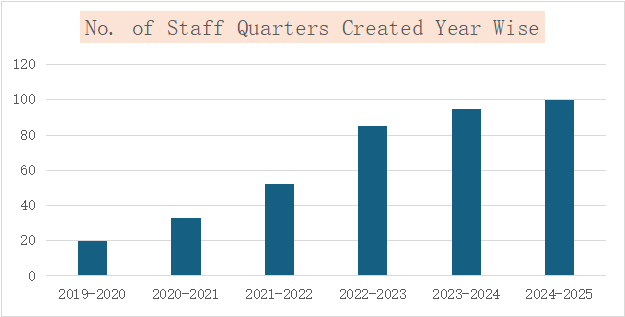
KL University has also created a significant number of staff quarters to support affordable and inclusive residential infrastructure.
With growing climate threats affecting urban regions, KL University reinforces its commitment to ensure the campus remains safe, green and accessible for all levels of mobility. Investments are directed toward climate-resilient buildings, increased tree cover, heat-reduction strategies and water conservation systems. The University enhances green spaces as public amenities, allowing fluid campus boundaries so that the local community can use open spaces for recreation and well-being. This action directly supports the metric on green spaces accessible to the community, with continuous efforts to enhance biodiversity through native plantations, pollinator gardens and nature-focused recreational zones.
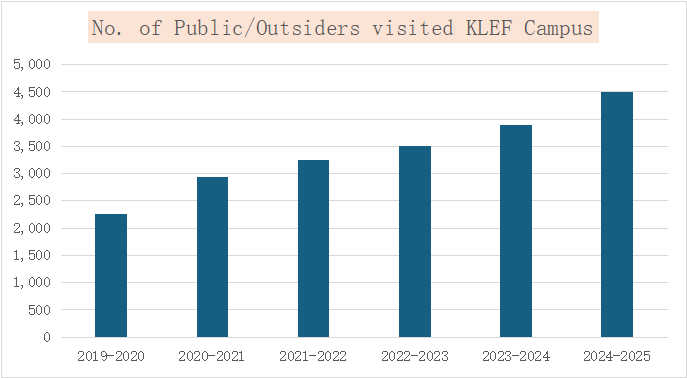
A considerable number of public visitors and outsiders visit the KLEF campus annually, making use of the open spaces, academic events and community facilities.
Recognising the global escalation of climate-related disasters, KL University expands its disaster response training to strengthen preparedness. This includes increasing the frequency and comprehensiveness of emergency drills for students, faculty, staff and residents of neighbouring communities. These actions align with the metric on disaster preparedness programs and support local resilience through coordinated awareness initiatives and simulation-based training.
Urban sustainability requires inclusive decision-making, robust local governance and access to accurate data. KL University invests in research and development through dedicated centres focusing on smart cities, sustainable urban design, transportation engineering, disaster mitigation and energy-efficient infrastructure. In line with the metric on urban planning research, the University has initiated multiple projects examining digital twin models, climate-adaptive campus planning and equitable distribution of public services.
To promote inclusive global governance and expand regional influence, the University actively engages with government bodies, NGOs and international partners. These collaborations support safe migration and mobility programs for students, cross-border research exchanges and community initiatives addressing environmental justice. KL University also supports regulatory efforts connected to financial markets that influence urban development, particularly in projects involving municipal bonds, sustainable investment and resource flows for development.
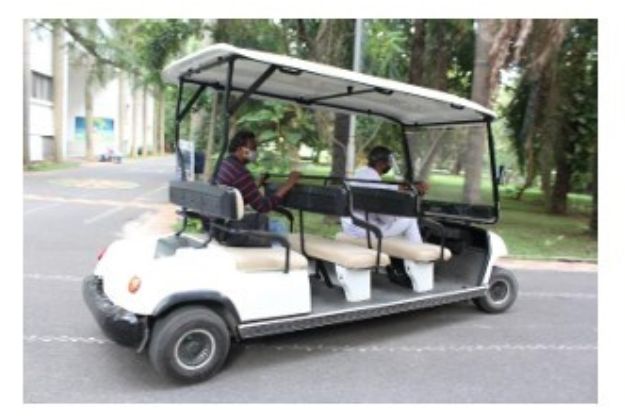
As global cities increasingly prioritise low-carbon transport systems, KL University works closely with local and state governments to advocate for improved public transportation, expanded bike paths and integrated mobility solutions. The University promotes sustainable transport by developing campus-wide initiatives, including electric shuttles, bike-sharing systems and pedestrian-friendly routes. These actions respond to the metric on promoting sustainable transport and help reduce the University’s carbon footprint.
In addition to mobility improvements, KL University implements best-practice pollution control and waste management systems. These policies include segregation at source, composting units, e-waste recycling programs and air-quality monitoring stations. The University is also exploring circular economy models to reduce material consumption and pollution, integrating sustainability principles throughout campus operations.
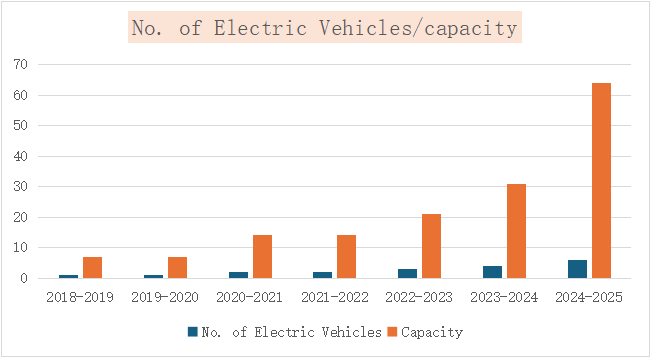
KL University has also expanded its fleet of electric vehicles to support zero-emission mobility across the campus.
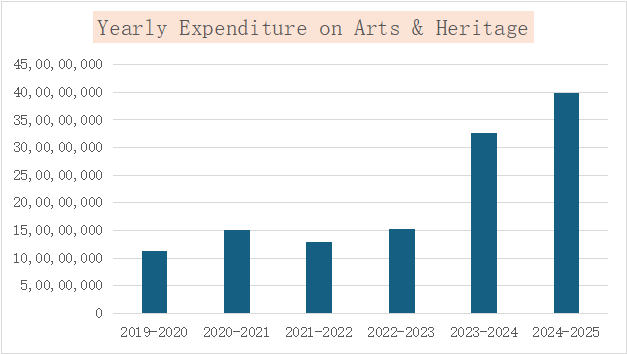
Cultural and natural heritage preservation is a vital component of sustainable communities. KL University supports local cultural heritage through collaborations with regional organisations, museums and cultural councils. This directly addresses the metric on supporting local cultural heritage. Joint activities include heritage walks, documentation of traditional knowledge systems, restoration support for local monuments and research partnerships to promote indigenous art, crafts and cultural expressions.
These actions reinforce community identity, promote intercultural dialogue and ensure that modernisation aligns harmoniously with cultural continuity. This approach is deeply connected to eliminating discrimination and fostering an inclusive social environment.
KL University also allocates a dedicated yearly expenditure toward arts and heritage preservation to strengthen cultural continuity and community identity.
KL University ensures that its campus community remains economically and socially inclusive. Through regular assessment of community needs, the University enhances programs that promote community well-being. These assessments guide decisions related to infrastructure upgrades, housing support, accessibility improvements and student-centred financial policies. They also help identify gaps in services, ensuring that vulnerable groups are supported through tailored initiatives.
The University’s broader engagement reflects core principles of economic inclusion fair income distribution, resource flows for development, and support for remittance channels that reduce remittance costs for international students. These efforts align with principles of special and differential treatment found in global economic frameworks such as the WTO, which emphasise equitable opportunities for developing regions and economically marginalised populations.
KL University’s comprehensive approach to SDG 11 demonstrates its commitment to creating inclusive, resilient and sustainable communities. Through initiatives spanning climate-resilient infrastructure, affordable housing, sustainable transport, inclusive governance and heritage preservation, the University functions as a model of urban sustainability. By integrating research, policy engagement, community collaboration and environmental stewardship, KL University strengthens its role as a transformative force capable of shaping sustainable futures both within and beyond the campus.