Sustainable Development Goals (SDG)

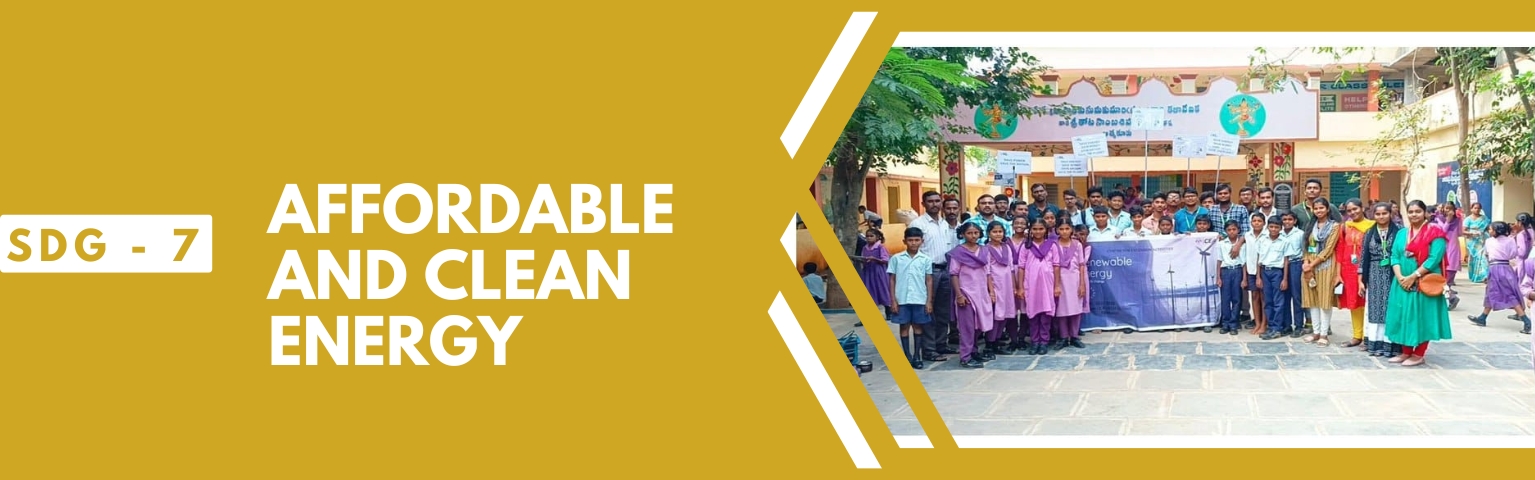
Goal 7 aims to ensure access to affordable, reliable, sustainable and modern energy for all, including universal access to electricity, clean fuels and technologies for cooking, while also increasing the global share of renewable energy through international cooperation and improved clean-energy infrastructure. KL University aligns strongly with this objective by prioritising accessible energy services, committing to climate-resilient systems and expanding renewable-energy integration across campus. The University’s long-term sustainability vision places clean energy at the core of resource planning, ensuring that students, staff and surrounding communities benefit from reliable, modern and low-emission energy solutions.
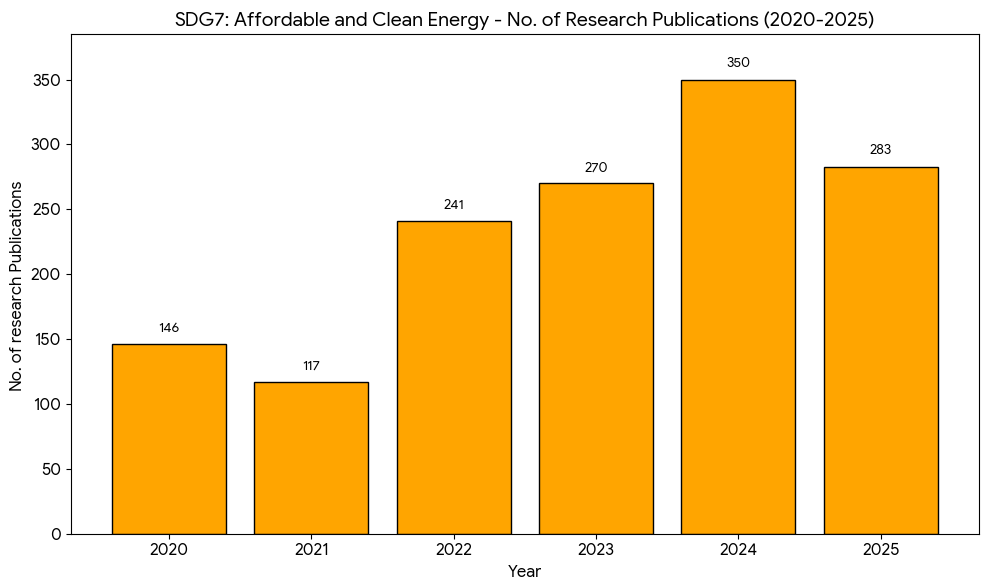
The University has also produced a significant number of publications related to SDG-7: Affordable and Clean Energy, contributing to ongoing research and innovation in the sustainable energy sector.
KL University maintains uninterrupted energy access across academic buildings, laboratories, hostels and common facilities, supported by efficient distribution networks and resilient backup systems. Continuous monitoring of energy consumption helps the University assess usage patterns, and monthly updates are published to maintain transparency and guide strategic improvements. The institution also extends its commitment beyond campus by exploring community-focused initiatives such as solar microgrids and awareness programmes, ensuring that neighbouring populations gain improved access to sustainable energy services. These initiatives enhance the inclusiveness of the University’s energy governance while contributing to regional energy-development objectives.
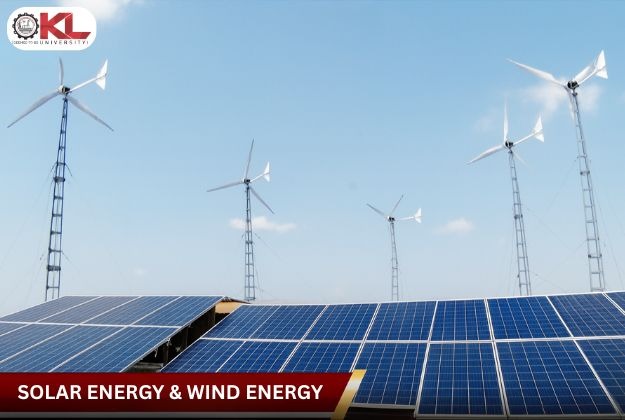
Consistent with global progress in renewable energy, KL University has significantly increased its share of renewable power by installing rooftop solar photovoltaic systems across major campus zones. These systems currently supply a substantial portion of the University’s daily energy demand and are being expanded to move steadily toward the institutional target of achieving 50% renewable energy self-sufficiency. The University also follows a zero-net emission approach, integrating sustainable technologies and practices aimed at reducing overall carbon output. Investments into on-campus renewable energy production continue to grow, with feasibility studies on hybrid systems and energy-storage technologies underway to optimise clean energy generation during peak hours.

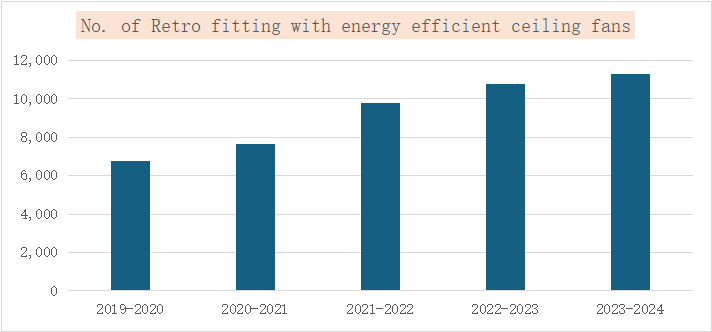
KL University places strong emphasis on energy efficiency as a core strategy for reducing environmental impact. New buildings are constructed following energy-efficient design standards incorporating LED lighting, sensor-based controls, natural ventilation, and green roof systems. Older infrastructure is being progressively retrofitted to adhere to these standards, ensuring a uniform approach to responsible energy consumption. Smart energy monitoring systems have been deployed across campus to track real-time consumption, reduce wastage and improve operational efficiency. These upgrades are complemented by comprehensive long-term resource efficiency plans and climate mitigation strategies that incorporate climate risk assessments within broader institutional risk reporting frameworks. These measures create an enabling environment for sustainable energy management and long-range resilience.
Recognising education as a key driver of the global clean energy transition, KL University offers structured training on renewable energy, sustainability and energy efficiency through academic programmes, workshops and practical sessions. Courses on solar technologies, energy auditing and sustainable infrastructure equip students with emerging-sector skills. The University collaborates with renewable energy industries, national bodies and international partners to support research, internships and innovation-driven projects. On campus, students and staff are encouraged to develop energy-saving habits through awareness campaigns, regular sustainability drives and hands-on conservation initiatives. These engagements cultivate a culture of shared responsibility, prompting behavioural change that supports the University’s overall clean energy mission.
The University also contributes significantly to SDG-7 research outputs through publications focused on renewable technologies, energy efficiency and sustainable infrastructure innovations.
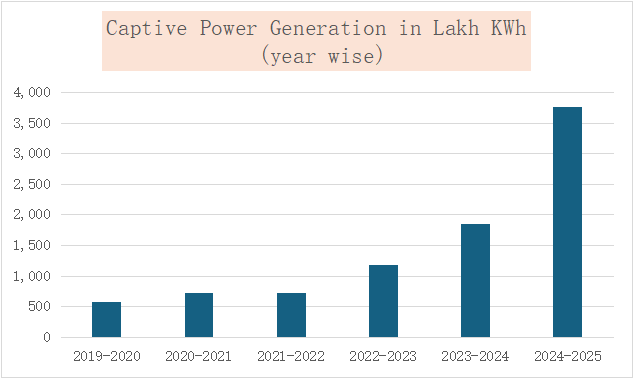
KL University actively strengthens international cooperation by participating in global networks, research collaborations and policy discussions that focus on enhancing access to clean energy. Partnerships with government agencies, international institutions and energy organisations contribute to capacity building, shared learning and technological advancement in sustainable energy systems. The University continues to invest in critical energy infrastructure, including expanding solar power generation, modernising electrical grids, upgrading energy-efficient equipment and adopting sustainable construction materials. These investments ensure alignment with global targets and support a long-term transition to modern, clean and reliable energy solutions.
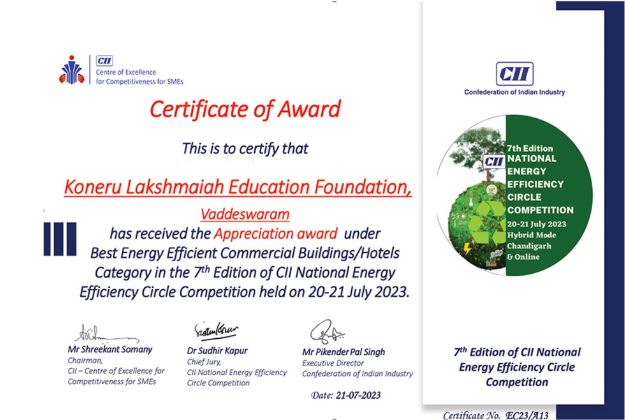
Energy sustainability at KL University is reinforced through strong governance frameworks that integrate ethical purchasing, responsible resource use and continuous monitoring. Procurement policies prioritise energy-efficient appliances, green-certified products and eco-friendly solutions. Sustainability performance is monitored regularly and reported up to the Council level to ensure accountability and strategic oversight. To minimise emissions, the University also promotes sustainable transport by expanding the use of electric vehicles, supporting cycling initiatives and reducing dependency on conventional fossil-fuel commuting. Moreover, staff and students actively participate in campus-wide sustainability programmes, which further strengthen institutional commitment to environmental responsibility and climate adaptation.
KL University demonstrates a strong, comprehensive and future-focused commitment to SDG 7: Affordable and Clean Energy through the expansion of renewable energy production, strategic investments in energy infrastructure, adoption of energy-efficient technologies and the promotion of responsible consumption patterns. By integrating climate adaptation strategies, strengthening community engagement, fostering industry partnerships and cultivating sustainability-focused education, the University positions itself as a leader in clean energy innovation and governance. Through continuous improvements in energy efficiency, expanded renewable use and sustained institutional commitment, KL University actively contributes to the global transition toward a sustainable, reliable and modern energy future for all.